
Quartz VS Granite

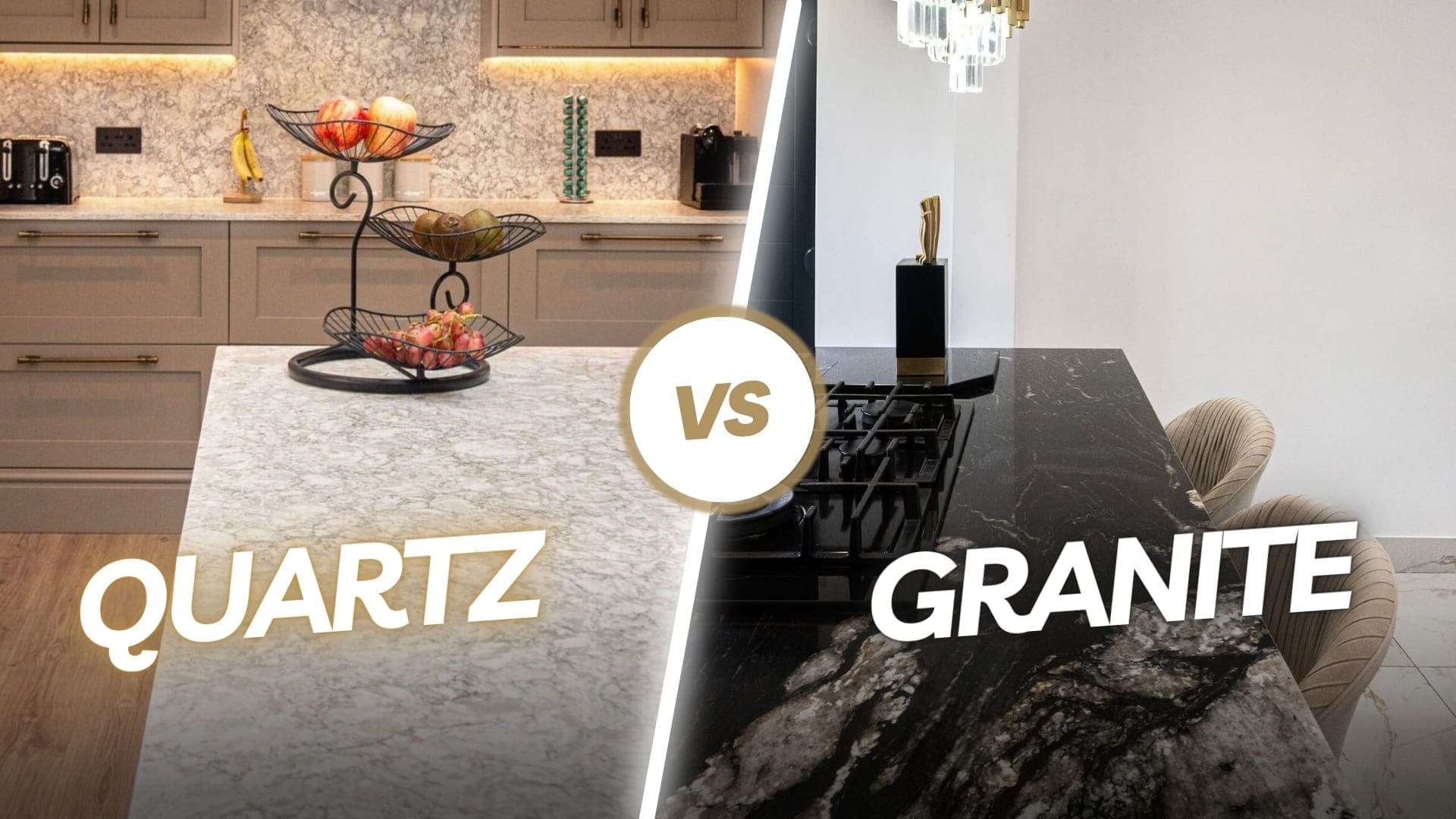
What if it is your weekend or summer holiday, and you planned to stay at home? Why not do a DIY kitchen worktop project of renovation, or entirely designing a new kitchen? I think it’s a great idea to do something fun and show your creativity. Otherwise, 9-to-5 jobs or boring businesses (that we do every day) do not give us enough ground to show our creativity and wisdom. But a DIY kitchen project of your friend, neighbour, or your own is a great way to restart your life.
When we are deciding on worktops and other slabs, two most widely used materials are available: granite and quartz. However, a major concern comes to mind when we are tackling our kitchen designs, styles, and colours for worktops and splashback. And that is: Which one is cheaper, granite or quartz? This is a very important question that needs to be answered accurately. Otherwise, your budget will get disturbed, and you will end up leaving other DIY kitchen renovations.
At Stoned Collective, our quartz experts know that you can’t decide which one is better in terms of price without knowing its benefits and downsides. That’s why we have taken action and divided this entire topic of “granite or quartz cheaper?” into little chunks so that it becomes easy to understand. After all, what’s the point of purchasing the cheapest worktop for your dear DIY kitchen worktop project if it has a lot of disadvantages? It’s not worth it.
So…let’s begin with the guide below!
Quartz vs Granite at a Glance
| Feature | Quartz | Granite |
|---|---|---|
| Material | Engineered — about 90–93% natural quartz with resin | 100% natural stone |
| Sealing | Never needs sealing (non-porous) | Needs periodic sealing (porous) |
| Heat resistance | Good — always use a trivet | Excellent |
| Stain resistance | Excellent (non-porous) | Good once sealed |
| Appearance | Consistent colour and pattern, incl. marble looks | Unique natural veining, no two slabs alike |
| Maintenance | Very low | Low, plus occasional sealing |
| Cost | Overlaps with granite — depends on colour | Overlaps with quartz — depends on the stone |
What is Quartz?

First, let’s see what exactly quartz, or quartz worktops, is before deciding on quartz vs granite costs.
“Quartz is a hard and crystalline mineral composed of silicon dioxide (SiO₂). It is one of the most abundant minerals found in the continental crust of the Earth. Interestingly, it is found in various rocks, such as granite, sandstone, and metamorphic rocks.
Pure quartz is colourless and transparent, known as rock crystal. However, impurities can give it a wide range of colours. It leads to varieties like amethyst (purple), citrine (yellow), smoky quartz (brown), and rose quartz (pink), many of which are used as gemstones.”
Moreover, the quartz surface is highly durable and resistant to weathering. This makes it a primary component of sand. It has numerous applications because of its physical and electrical properties, including use in glass manufacturing, abrasives, electronics (such as oscillators in watches and computers because of its piezoelectric properties), and as a building material. However, one of the best uses of quartz material is the Do-It-Yourself worktop.
Quartz kitchen countertops provide a modern update on traditional stone. Unlike mined materials such as marble or granite, they are engineered surfaces. They combine crushed quartzite and minerals with strong, bonding resins. This creates a kitchen countertop that looks like natural stone but offers superior durability.
The engineering of quartz slabs is what sets them apart. Manufacturers like DIY Kitchens, Worktop. create diverse patterns, from delicate designs to dramatic veins. Importantly, many homeowners in the UK admire marble’s stunning look but dislike its high maintenance and cost. On the flip side, quartz worktops provide that style without the maintenance worries. It suits any kitchen perfectly because it is resistant to stains, scratches, and daily use.
We have covered how tough the quartz slab is. Now, let’s talk about its looks. Honestly speaking, you will get dozens of design options with DIY quartz countertops. You can find a style for any taste, from crisp white to really dark colours. They fit modern or classic kitchens perfectly, all without the usual stone problems. I think we have shared a lot about quartz worktops in the first section. Let’s share what granite kitchen worktops are in the next section of this guide.
What is Granite?
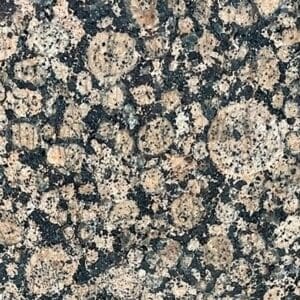
Let’s see what granite or granite worktops are.
“Granite is a common type of intrusive igneous rock. It is formed from the slow cooling and crystallisation of molten rock (magma) deep within the crust of the Earth. This gradual cooling process allows for the formation of large and visible mineral grains that give granite its characteristic coarse-grained texture.
Its name, “granite,” derives from the Latin word “granum,” meaning “grain.” The primary minerals that make up granite are quartz, feldspar, and mica. The proportions and types of these minerals, along with the presence of others, determine the colour of granite. So, the colours of granite slabs can vary widely, from pink and red to grey and black, often with speckling.”
Granite material is known for its exceptional hardness, durability, and resistance to abrasion and chemical weathering (just like quartz material). It forms a significant portion of the continental crust of the Earth and is quarried extensively worldwide. Various industries use it for many applications because of its strength, longevity, and aesthetic appeal. Granite is widely used in construction for buildings, bridges, monuments, paving stones, and particularly popular for kitchen and bathroom countertops.
Did you know granite worktops bring nature’s beauty right into your home? We always say that it is not like engineered options such as quartz. This is because it is 100% natural stone. It forms deep in the Earth over vast periods. Then, it is quarried, sliced into slabs, and polished. Best of all, each piece is unique with distinct colours and patterns.
Interestingly, granite countertops stand out for their unique patterns and colours. You will rarely see two slabs that are exactly alike in terms of their colours, patterns, veining, and style. This means every piece is a natural work of art that differs from the other. You will find styles from deep and dramatic colours to soft and neutral ones. However, granite kitchen countertops offer fewer colour and design choices compared to quartz worktops.
Furthermore, its durability is a major perk. It holds up against heat, scratches, and all the bumps of daily life with ease. A polished granite countertop just adds such timeless elegance to your kitchen or bathroom space. You can take it as a material bringing together strength, natural beauty, and true craftsmanship from nature itself. So, granite is the perfect fit for your kitchen, bath, or really any room you choose if you appreciate authenticity, unique character, and a piece of nature indoors.
Quartz Vs Granite Worktops: Which Are Cheaper?
Quartz and granite worktop prices have always been a battle between two types of materials, in which we have to take one side. Although both materials have cool benefits, costs can swing based on quality, colour, and installation. Let’s understand it with this example: granite is pulled right from the earth, while quartz is mixed with resins.
That difference in how they are made to change their consumer prices. So, the question is: how to figure out the cheaper deal overall? For this answer, you need to look at the average material costs, maintenance costs, and how long each will really last. Let’s start with the granite vs quartz cost factor.
Quartz vs Granite: Costs
Let’s talk about the quartz and granite countertop prices. As we have already mentioned, they are both considered higher-end materials. They are not the absolute cheapest pick options out there in the DIY kitchen worktop industry. But, they seriously add value to your place over time.
As we are always honest with our readers, neither will fit accurately within your budget if you are looking for super-affordable slabs. But, it is a smart DIY idea to compare their costs, essential if you want something strong and good-looking. Let’s see which is cheaper: quartz or granite.
Granite
As we all know this fact that granite is a natural stone. That means its price depends on where in the world it is dug up. If you are looking at rarer colours or those standout patterns, you ought to expect a higher price for granite.
Plus, installation costs add up, too. This is because this stone is heavy and needs experts to fit it right. You can’t just install it alone while depending on your abilities.
If you do it yourself, you can end up cracking it. In simple words, you can’t install granite worktops on your own when you are doing DIY kitchen work. Plus, you will need to seal it regularly, almost every few years.
Sealing it after three years is best to keep stains away. So, yes, count all these maintenance expenses that you will encounter with the passage of time.
Quartz
Now, let’s look at the costs of quartz worktops. Did you know we have installed hundreds and thousands of quartz kitchen countertops and splashback in kitchens and bathrooms all over the UK? And, we have taken reviews from those homeowners about quartz or granite prices.
All of them said, “Quartz kitchen worktops are budget-friendly when we compare their price and maintenance costs with granite worktops prices.” As you all know, it is an engineered material. In fact, we call them “engineered stones.” So, quartz worktop price per square metre is much more consistent.
Another big benefit is that you don’t need to seal it regularly, like you do after three years with granite worktops. The non-porous surface of quartz keeps maintenance costs nice and low. Also, getting quartz slabs installed is usually simpler than compared to natural stones like granite or laminate. That means installing quartz by yourself or from DIY experts will lower labour expenses for you.
Granite vs Quartz: Availability
Another factor for which people like it so much? Availability. Since quartz or granite are both imported, transportation costs affect DIY worktop prices. However, quartz is more widely available. That’s why it is the more affordable choice.
Granite
Granite, being a natural stone, is only available where it is quarried from the Earth. This means its availability depends on specific geological locations around the world. Although many types of granite are commonly used in the UK, rarer colours and patterns are found only in select quarries.
This makes them less consistently available all over the UK and often requires longer transportation distances. This natural limitation can sometimes lead to delays and higher costs for granite. More specifically, granite worktops prices are higher than any other quartz surfaces if you are looking for a very particular or unique granite slab for your DIY project.
Quartz
In contrast, quartz DIY worktops are engineered and manufactured in factories all over the UK. This process allows for greater control over production and supply chains. Manufacturers like us (Stoned Collective) can produce quartz slabs more consistently and in larger quantities to meet demand.
As a result, quartz surfaces are more widely available globally compared to specific types of granite. This broader availability means more reliable supply and shorter lead times. It helps to keep the price more stable and typically lower. In the end, it gives quartz an edge in accessibility and affordability for your DIY kitchen renovation.
Quartz or Granite: Sustainability
When choosing materials for your DIY kitchen worktop, it is increasingly important to consider their environmental impact and sustainability. Both granite and quartz have consequences for the planet, but they differ in key ways regarding sourcing, production, and ongoing maintenance.
Let’s look at how they stack up from a sustainability perspective.
Quartz
Did you know quartz worktops have sustainability advantages, largely because of their engineered nature? These slabs are not like stone, which requires extensive quarrying of large slabs. Quartz kitchen countertops are even made using leftover mineral fragments and recycled stone.
This process reduces the environmental disruption associated with quarrying virgin stone. Also, it helps minimise waste from other industries. Furthermore, production facilities can be located closer to consumer markets, as quartz is manufactured. It reduces transportation distances, and the associated carbon emissions compared to materials quarried far away.
The inherent durability and longevity of quartz also add to sustainability. It means the quartz worktop will last for many years without any replacement needs. Its non-porous surface is another green benefit. It prevents build-up of bacteria naturally.
Also, it does not require harsh chemical sealants (like some natural stones do) to reduce the introduction of toxic products into your home environment over time. This makes quartz a more environmentally friendly choice for the long term. Now, let’s see what’s the condition with granite kitchen worktops.
- Granite, as a natural stone, has a different sustainability profile. Its extraction requires significant quarrying operations, which can lead to habitat disruption and land impact at the source. Although granite is a natural resource, its journey from quarry to DIY kitchen involves considerable transportation distances (sometimes across continents).
These long transport routes cause a higher carbon footprint because of fuel consumption and associated emissions. Additionally, most granite slabs require sealing upon installation and periodic resealing (typically every few years) to prevent staining and bacterial growth. You can use some best food-grade sealants available. But, most products used in them can contain chemicals.
It adds another layer of environmental hazard and ongoing maintenance effort compared to a non-porous surface. Thus, we are not disagreeing that granite is incredibly durable and long-lasting once installed. But, the environmental impact associated with its extraction, extensive transportation, and the need for chemical sealing give quartz an edge in the sustainability comparison.
Quartz vs Granite: Durability & Consistency
Let’s see who wins when it’s a matter of durability and consistency between quartz and granite worktops for undertaking tasks like repairing, building, and modifying existing kitchens in the UK.
Quartz
Quartz provides unmatchable durability, consistency, and high-performance value as compared to granite. It is a decent surface that is purely impenetrable, resistant, impermeable, and impervious. You can ask, why?
Well, the answer is very simple and proven. Our quartz worktops are built to say big “NOOO!” to moisture, water, spills, bacteria, germs, dirt, stains, and many other negativities like these. Fortunately, you don’t need to stamp or seal these slab surfaces when you are doing your DIY kitchen renovations. Above all, our quartz slabs are built to cope with your daily usage in the kitchen or bathrooms.
They are “YESSS!” for active households. You can chop your favourite food on its slab without worrying about hygiene and cleanliness. When we talk about the durability of quartz, we always mention that these slabs have zero negative points. It shows that they can handle risks of chips and cracks.
You will never see them cracking or chipping from any side. All you will get is a long-lasting surface. This means quartz worktops are highly maintenance-free, super classy, glossy, and durable.
Granite
Granite surfaces are also durable, but not as much as quartz or quartzite countertops. It holds up well in its own way. But it needs more care, as it is higher maintenance. Things like spilled coffee, wine, or tea can soak right in. This can stain the surface.
Over time, it can even cause damage. That’s just how it is with natural stone sometimes. Moreover, that natural variation means no two granite slabs are exactly the same. Although beautiful, this also means their strength can vary a little.
Sometimes, there are tiny fissures or weak spots you cannot easily see. This makes their performance less predictable than engineered materials. You will require extra care with heavy impacts in certain areas.
So, that natural element means it lacks the perfect, uniform consistency that engineered quartz offers for a truly worry-free surface every single day. Quartz often feels like the safer bet for busy households in terms of consistent toughness and almost zero maintenance needs.
Granite or Quartz: Heat Resistance
When you are busy in the kitchen, heat resistance in a worktop is definitely important. Both granite and quartz are durable for handling heat. But honestly, the differences are often talked about more than they need to be for everyday cooking.
Let’s see how quartz and granite worktops compare for your DIY kitchen.
Granite
Granite is famous for handling heat. Yes, it can handle extremely high temperatures. It is said it can take up to 1,200 degrees Fahrenheit. However, that big number doesn’t tell the complete story for regular kitchen use. As we know, granite is a natural stone and is mildly porous.
This means it can react poorly to sudden temperature changes, like putting a very hot pan directly onto a cold spot. This rapid change can weaken the stone over time and can even cause cracks. So, what does it show? While it tolerates high heat, its porous nature makes it vulnerable in other ways that matter day-to-day.
Quartz
On the flip side, quartz offers excellent heat resistance for typical kitchen tasks. It is generally rated to handle temperatures up to about 300 degrees Fahrenheit. The real advantage here is that quartz is non-porous. Unlike granite, you do not have to worry about thermal shock weakening the material from rapid temperature changes.
Plus, think about how you cook. You can use trivets or heat pads under hot pots and pans. It is a standard habit in any kitchen to protect any worktop surface. This simple practice makes the extreme temperature tolerance of granite less of a big deal. It also highlights the practical and worry-free nature of quartz for heat in normal cooking situations.
Frequently Asked Questions about Quartz and Granite Prices
What is the main difference between quartz and granite?
The major difference between quartz and granite comes down to composition. That is the main difference to remember. Granite is a stone that comes straight from nature. Quartz is completely made by people. It is engineered. Even with this difference, both materials are seen as top choices for a really nice worktop.
Which is easier to care for and maintain: quartz or granite?
Quartz wins here, hands down. It is really effortless to maintain. You never need to seal it, unlike granite. Its surface is not porous at all, and we don’t know how many times we will happily share these facts again and again. But, these are just facts. Its man-made surface helps it fight off stains and bacteria easily. Just wipe up spills or messes with a simple cloth. That is really all there is to it.
Does quartz scratch more easily than granite?
Actually, the answer is no. Quartz does not scratch easier than granite. Quartz is more resistant to scratches. It is engineered with resins, which makes its surface very hard and tough. Granite is natural stone. It needs sealing, and even then, it can be more prone to scratches or little chips.
Which is more expensive: quartz or granite?
A common question is always which costs more: quartz or granite. Generally speaking, granite worktops are more expensive. Their price changes a lot based on how rare the stone is or where it comes from. On the other hand, quartz gives you that high-end look for a price that is more steady and usually easier on the wallet. Many see quartz as the smarter buy overall, especially with less upkeep needed.
Do granite or quartz countertops increase the resale value of your home or property?
Do granite or quartz countertops help when you sell your place? Yes, both can definitely add value to your home or property. Putting in either of these materials in kitchens or bathrooms just makes things look nicer. This makes your home more attractive to people who want to buy it.
However, quartz does have a bit of an edge here. People really like its low maintenance and modern look. Buyers often prefer surfaces they do not have to take care of most often. So, quartz feels like a very attractive choice for the long run.
Granite is still valued by many who love natural stone. But its maintenance is seen as a negative point. For boosting home value with less effort, quartz is often seen as the smarter investment. It is stylish, tough, and something buyers appreciate. A 100% recommendation.
Quartz vs Granite: Which Costs Less?
In conclusion, we must admit that quartz wins in every battle and factor of consideration. It is an extraordinarily great material that has changed our lives. It has changed our views about kitchens and bathrooms. Also, gives you a coherent look, impressive decency, low maintenance, wide range of colours and patterns, and much more. To be honest, we don’t know which amazing fact about quartz worktops for Stoned Collective to share here or which one is still skipped today.
After all, it’s a man-made material and all it benefits goes straight to the man’s kitchen. It’s a 100% hygienic, modern, non-porous, heat-resistant, water-resistant, and smarter choice in this era. Above all, it’s super practical and affordable. Yup, it’s budget-friendly for our homeowners in the UK and all over the world.
So, how about upgrading your kitchen soon? Get in touch with us at Stoned Collective! Remember, we make these worktops ourselves. There is no middle man involved. Just call us directly at 01923223859 or 07432065334. We can offer expert advice and help you find a great surface.
Quartz vs Granite: Frequently Asked Questions
Is quartz cheaper than granite?
Quartz and granite prices overlap heavily. Some quartz costs less than granite and some costs more — the colour, thickness and your kitchen layout usually matter more than the material itself.
Is granite or quartz more expensive?
Neither is always more expensive. Exotic granites and premium marble-effect quartz sit at the top end, while classic colours of either material are more affordable.
Which is more durable, quartz or granite?
Both are very hard and scratch resistant. Granite is slightly more heat tolerant, while quartz is non-porous and more resistant to stains and bacteria.
Do quartz and granite worktops need sealing?
Granite needs sealing on installation and re-sealing periodically because it is porous. Quartz is non-porous and never needs sealing.
Which is more heat resistant, quartz or granite?
Granite is more heat resistant than quartz. Quartz can be damaged by very hot pans because of its resins, so always use a trivet with either surface.
Is quartz or granite better for kitchen worktops?
Neither is simply better. Choose quartz for zero maintenance and consistent colour; choose granite for natural, one-of-a-kind veining and excellent heat resistance.
What is the difference between quartz and granite?
Quartz is an engineered surface made mostly from natural quartz bound with resin, while granite is a 100% natural stone cut from quarried blocks. Quartz is non-porous; granite is porous and needs sealing.
Which is easier to maintain, quartz or granite?
Quartz is easier to maintain because it never needs sealing and resists stains. Granite needs occasional sealing but is otherwise simple to clean.
One thought on “Quartz VS Granite”