
Why Quartz Worktops Look Different in Showrooms

You visit a showroom, fall in love with a quartz worktop, then install it at home… and suddenly it looks completely different.
This is one of the most common surprises homeowners experience during kitchen renovations.
A quartz surface that looked bright, warm, and luxurious inside a showroom may suddenly appear:
- Darker
- Greyer
- Colder
- More reflective
- Less dramatic
inside a real kitchen.
A lot of homeowners browsing stonedcollective ask questions like:
- “Why does my quartz look different at home?”
- “Why does quartz change colour?”
- “Do showroom lights affect quartz?”
- “Why does my sample not match the installed worktop?”
The truth is that quartz worktops react heavily to their surroundings.
Lighting, cabinet colours, room size, surface finish, and even wall paint can completely change how quartz appears.
Showroom Lighting Is Designed to Make Quartz Look Better
This is probably the biggest reason quartz looks different in showrooms.
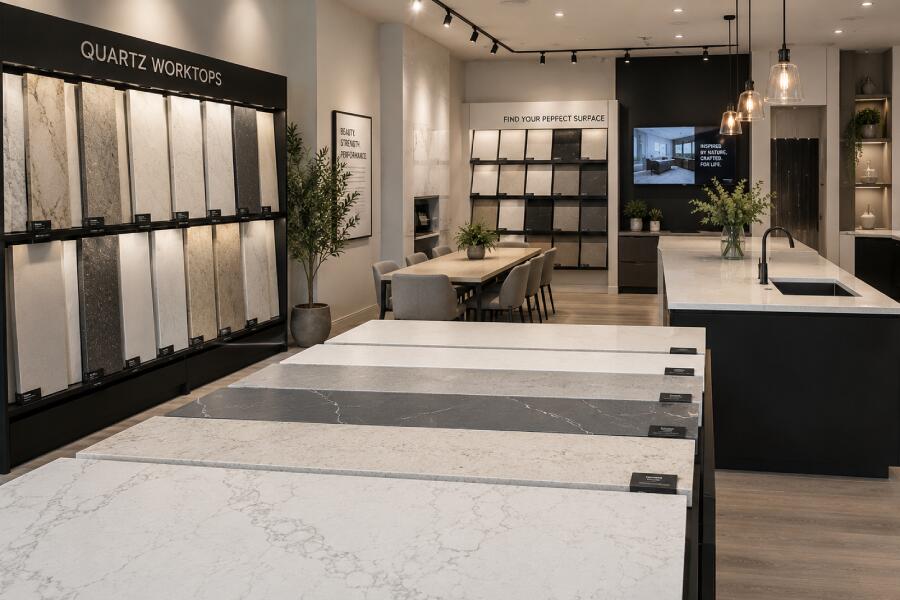
Most kitchen showrooms use carefully planned lighting systems specifically designed to enhance surfaces.
These often include:
- Warm LED lighting
- Directional spotlights
- Under-cabinet lighting
- Large open spaces
- Reflective room layouts
All of this helps quartz appear:
- Brighter
- Cleaner
- More luxurious
- More dramatic
Once the same slab moves into a smaller home kitchen with different lighting, the appearance naturally changes.
Quartz Reflects Surrounding Colours
Quartz does not exist visually on its own.
It constantly reflects nearby colours and lighting conditions throughout the day.
This means your worktop appearance may change depending on:
- Cabinet colour
- Flooring
- Wall paint
- Splashbacks
- Natural daylight
- Window direction
For example, white quartz paired with grey cabinets often looks cooler or slightly darker compared to the same slab beside warm oak cabinetry.
This is one reason many homeowners later explore articles like What Colour Quartz Worktop Makes a Small Kitchen Look Bigger? because room size and surrounding tones dramatically affect quartz colour perception.
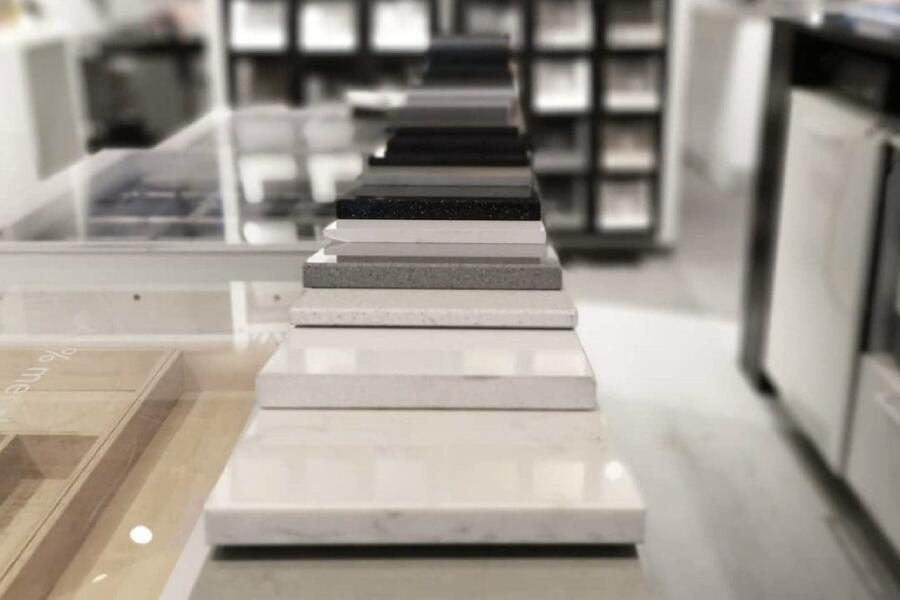
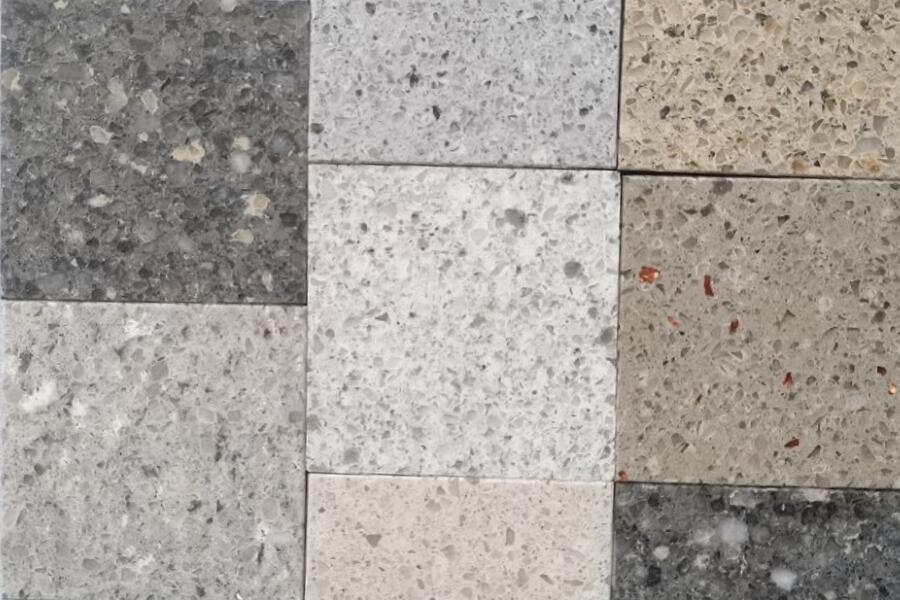
Small Samples Never Show the Full Quartz Pattern
Tiny samples can be misleading.
A small hand sample often hides:
- Large veining movement
- Colour variation
- Reflection levels
- Surface depth
- Overall slab character
This becomes especially noticeable with:
- Calacatta quartz
- Marble-effect quartz
- Bold veining designs
- Dramatic movement patterns
A sample may look subtle in your hand but appear far busier once installed across a full kitchen island.
That is why many homeowners now ask to view full slabs before making final decisions.
Natural Light Changes Quartz Throughout the Day
Quartz surfaces rarely look identical from morning to evening.
Natural daylight constantly changes depending on:
- Time of day
- Weather
- Window direction
- Seasonal sunlight
North-facing kitchens often make quartz appear cooler and greyer, while south-facing rooms usually create warmer tones.
A customer recently selected a warm white quartz slab inside a brightly lit showroom. However, once installed inside her north-facing kitchen, the worktop appeared much softer and slightly greyer than expected. After adding warmer under-cabinet lighting, the quartz immediately looked far closer to the original showroom appearance.
Surface Finish Makes a Huge Difference
The quartz finish also changes how the slab reacts to light.
Polished quartz reflects light strongly, while matte finishes absorb more light instead.
This affects how:
- Veining appears
- Shadows form
- Reflections behave
- Colours feel overall
Many homeowners compare finishes later, research:
- Is Polished or Matte Quartz Better for Modern Kitchens?
- What Quartz Worktop Finish Is Best for Busy Kitchens?
because the same quartz colour can feel completely different depending on the finish chosen.
White Quartz Often Looks Greyer at Home
This is another very common issue.
Showroom lighting usually makes white quartz appear brighter and cleaner than it does in real kitchens.
At home, cooler lighting or darker surroundings may pull out hidden undertones like:
- Grey
- Beige
- Blue
- Cream
This does not mean the quartz changed colour. It simply reacts differently under new lighting conditions.
Open-Plan Kitchens Change Quartz Appearance Too
Large showroom displays often have huge amounts of open space surrounding the kitchen.
This creates:
- More light reflection
- Better airflow
- Fewer shadows
- Cleaner visual contrast
Smaller home kitchens naturally contain:
- More clutter
- Narrower layouts
- Lower ceilings
- Stronger shadows
As a result, quartz sometimes feels visually heavier once installed.
Why Quartz Looks Better in Professional Photos
Professional photography also changes quartz’s appearance massively.
Showroom images often use:
- Edited lighting
- Enhanced brightness
- Camera filters
- Professional colour correction
- Controlled reflections
Real kitchens simply do not behave the same way naturally.
This is one reason online photos alone should never be the final decision factor when choosing quartz.
How to Choose Quartz More Accurately
The best approach is to view quartz under real conditions before buying.
Many homeowners now:
- Take samples home
- Test them beside the cabinets
- View them in daylight
- Check them at night
- Compare polished vs matte finishes
This gives a much more realistic idea of how the quartz will actually look after installation.
Final Thoughts
Quartz worktops often look different in showrooms because lighting, room size, surrounding colours, and photography all affect the final appearance.
The quartz itself usually has not changed at all.
Instead, the environment around the surface changes how your eyes perceive colour, texture, and reflection throughout the day.
That is why many homeowners now avoid choosing quartz based purely on online photos or small samples alone.
And if you are still comparing quartz colours, finishes, or full slab options, the team at get a qoute can help you view surfaces under more realistic kitchen conditions before making a final decision.
Frequently Asked Questions
- Why does quartz look different at home?
Lighting, cabinet colours, room size, and natural daylight all affect quartz’s appearance after installation.
- Do quartz samples look different from full slabs?
Yes. Small samples often hide large veining patterns and overall colour movement.
- Why does white quartz look grey at home?
Cool lighting and darker kitchen surroundings can pull out grey undertones in white quartz.
- Does matte quartz look darker than polished quartz?
Usually yes. Matte finishes absorb more light while polished quartz reflects it. - Should I view a full quartz slab before buying?
Yes. Viewing a full slab gives a much more accurate idea of colour, veining, and overall appearance.