
Engineered Quartz: How These Popular Kitchen Worktops Are Made

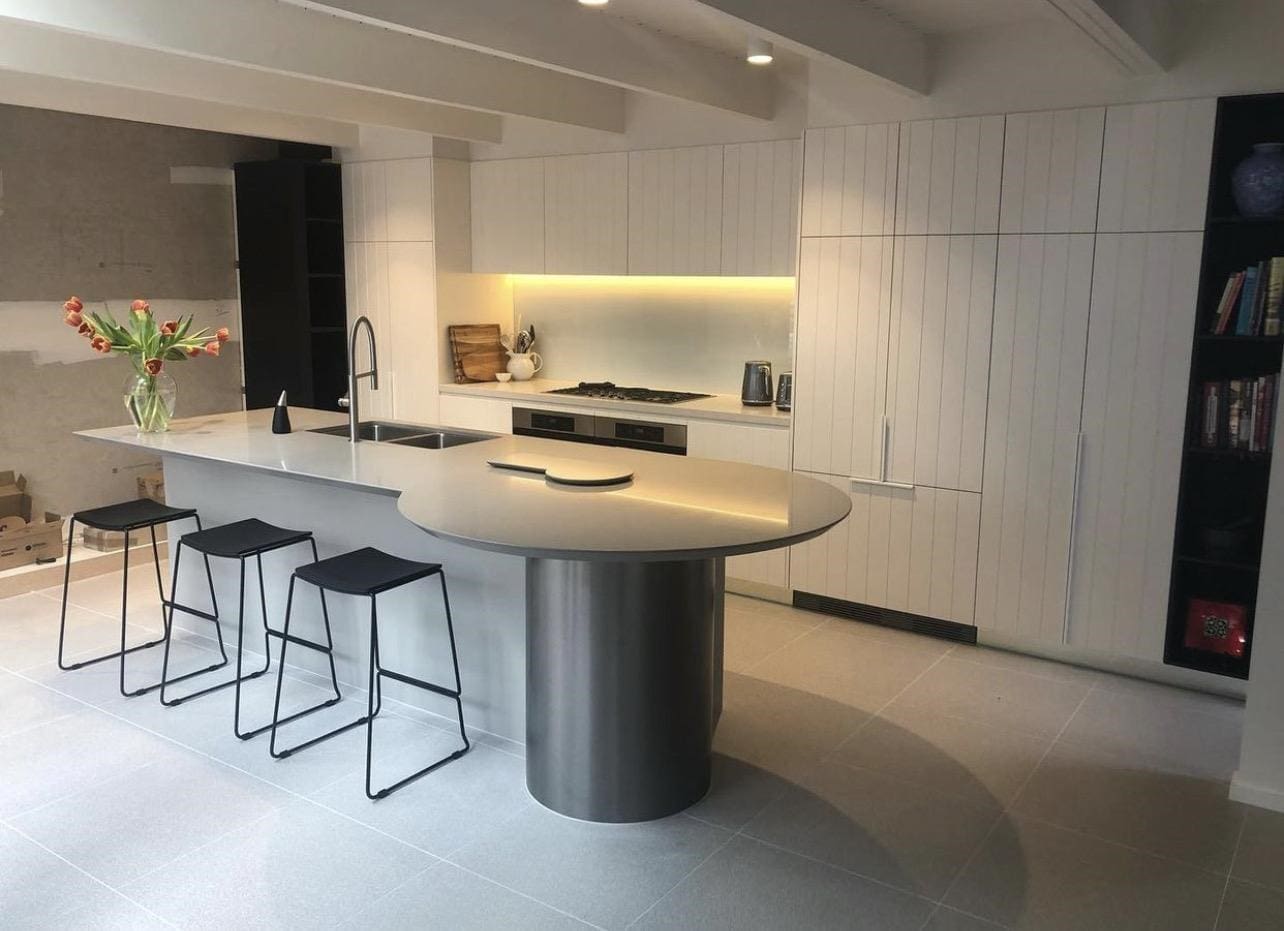
If you are a newbie and searching for a newer worktop, I’m sure you would have heard about quartz. This is a premium engineered material that has become the trendiest one for contemporary kitchens. According to today’s statistics, quartz countertops are the most demanding types of materials because of their flexibility, durability, and a number of patterns, colours, and designs. However, DIYers always ask one question from our experts: How to make a quartz worktop?
A complex industrial process is executed to make a quartz worktop. It blends natural quartz crystals, resins, and pigments under intense pressure and vacuum. This forms a dense and non-porous slab of quartz material. It shows making a quartz worktop is not a DIY project as it requires specialised machinery and precise techniques. Plus, expert knowledge is required for tiny pieces, even with advanced tools. That’s why it is better to get quartz countertops from professional manufacturers.
Keep reading this guide from start to last wrap-up. In this way, you will gain all essential information about “How to make a quartz worktop?” Or, you can even make it or it’s better to hire a professional like Stoned Collective experts to do this task.
First we will see what are the pros and cons of quartz worktops and why everyone is crazy about this trendiest material.
Pros and Cons of Our Engineered Quartz Worktops
Let’s not consider any conventional stone worktop like granite or marble before watching the pros and cons of our reputable quartz countertops. After all, these are the trendiest ones in this decade. When you see them you can analyse that they are versatile enough to grab your attention. But, are they even worth your money? Let’s decide on the advantages and drawbacks of quartz kitchen worktops.
Pros of Engineered Quartz Worktops
Here are a few pros to help you decide if these engineered stones are a great choice or not.
- Cleaning is easy for quartz surfaces. A little water and mild soap is all you need. Plus, wipe downs are quick and simple.
- Quartz worktops do not require ultra high maintenance. They resist stains beautifully. Cracks are not a worry either. Hence, it is a low-maintenance surface.
- You get so many choices with quartz. It comes in a huge variety of colours. There is an amazing range of patterns too.
- Engineered quartz worktops are built to last. They offer incredible durability. Your worktop will look stunning for many years.
- This surface is wonderfully hygienic for your home. It is a reliable place to prepare meals. You can confidently cook for family and friends.
- Quartz has a completely non-porous surface. Liquids cannot soak into it at all. This prevents deep stains from forming.
- Forget about yearly sealing treatments. Quartz worktops never require sealing. Thus, this engineered surface saves you time and effort.
- Installing quartz has your home’s appeal. It adds significant value to your property. Buyers appreciate this premium upgrade.
- Your quartz worktop resists scratches very well. Everyday use is no problem because of its tough surface. Knives are unlikely to mark it easily (though use a board!).
- Each quartz slab offers consistent quality. Colours and patterns match reliably. This makes planning and installation much easier.
Cons of Engineered Quartz Worktops
Let’s look at the downsides of quartz worktops.
- First, they are not completely heat-proof. Not 101%. So, you should not place scorching hot pots or pans directly onto the surface. This is easily solved, though! Just use affordable heat pads or trivets.
- Second, quartz is a heavy material. Because of this, you will likely need professional help for installation for which Stoned Collective experts are always available. It is not a simple DIY job due to the weight.
So, it is clear engineered quartz worktops are a fantastic choice for your kitchen update. They offer so many benefits we have just discussed. Now, we can discover where this amazing material actually comes from and from where you can grab them. Also…let’s see exactly how it is made ready for your home.
Where to Buy Quartz Worktops?
Are you a resident of the UK and looking for the perfect quartz worktop? Then you need to contact Stoned Collective! We are the leading supplier in the UK for premium and luxury quartz surfaces. We offer an unbeatable combination of quality, value, and service.
Our expert team has years of experience. We help you find the ideal quartz for your home. You can explore our stunning range both online and in our various showrooms across the UK. We invite you to see the colours and patterns up close, and feel the amazing quality firsthand.
We guide you from selection through to expert templating and installation. In this way, choosing Stoned Collective means choosing excellence and lasting beauty. Get in touch today to start your project. You can call us directly at: 01923223859 or 07432065334. You can also contact MO’s STONEX as this is our root manufacturer.
In the next section, let’s see how these engineered materials are made!
How to Make Engineered Quartz Kitchen Countertops?
To understand how engineered quartz worktops are created, we must explain the technology involved. We also need to share the overall process. Let’s get ready to see behind the scenes.
Use of Breton technology
Quartz might feel new and trendy, but the core technology is actually much older. It has been around for decades! The brilliant method to create this engineered stone came from the Breton Company. They developed it way back in 1963.
The process blends crushed quartz crystals with special polymers. Air is then removed using vacuum. Finally, the mixture is heated and shaped into those familiar large slabs that we install in our homes for various applications.
Breton continues making engineered quartz today. But many other companies now use this same core technology. It is important to understand this point. We mean to say that each brand adds their own special touches even with the same basic process. These create truly unique quartz products.
So, all quartz are not similar, even using similar manufacturing methods. In fact, every brand or manufacturer has their own unique styles and designs when it comes to quartz. The variations in quality, colours, and patterns are what makes them different.
Now, let’s see how quartz is made!
Click here if you want to read the complete history of quartz.
How Engineered Quartz is Made?
Did you know quartz is a super common crystal that is abundantly available? You can find this mineral almost everywhere. The amazing journey to your kitchen worktop starts right at the beginning. It begins by carefully taking raw stone clusters (pure raw quartz crystals) from the ground.
Next, the raw quartz gets crushed into smaller pieces in factories. Then, it is mixed with other elements. This includes strong polyester resins and lovely colour pigments. After thorough mixing, this blend is compacted into large, solid slabs.
The final stage involves applying the perfect finish. This gives the slab its smooth and non-porous surface. It is thanks to these precise steps and materials that the finished quartz looks so much like beautiful natural stone. At Stoned Collective, most of the premium manufactured quartz slabs look similar to Italian marble.
Step-by-step Procedure of Making Quartz – From Crystals to Worktops
The step-by-step procedure of making quartz is a precise blend of natural quartz crystals and advanced resin technology. This controlled method completely changes raw materials into the durable and beautiful slabs you see. Let’s walk through the key steps involved in making this popular material.
Crushing and Grinding
First, those natural quartz crystals we talked about? They go through a crushing and grinding process. This breaks them down significantly. The result is a very fine powder. This powder is very important – it is the main ingredient that gives the worktop its strength and composition.
Mixing and Blending
In the next step, that fine quartz powder gets combined with other ingredients. This includes polyester resins and pigments. The resins act like a super-strong glue that binds all those quartz particles tightly together. Pigments are also added at this stage. They are what give the quartz worktop its wide range of beautiful colours and patterns. In this step, everything is thoroughly mixed to ensure a uniform blend.
Molding and Pressing
Once everything is perfectly blended, the mixture is carefully poured into a mold. This is where the magic of forming the slab happens. The size of this mold sets the initial slab thickness, typically 20mm or 30mm. The mold then goes through a process of intense pressing under both vacuum and high pressure. This crucial step compacts the material tightly, forcing out any air and creating that signature non-porous slab structure.
Curing and Cooling
After the step of pressing it, the newly formed slab is carefully heated. This high temperature helps to fully solidify the mixture. Following this, the slab enters a cooling phase that allows the material to properly cure and harden. This step develops its final strength and durability.
Cutting and Shaping
Your slab is ready for the next stage after getting fully cured and cooled. This step involves precise cutting and shaping. The large slabs are cut down to the specific dimensions and forms needed using specialised equipment. This step guarantees they will fit perfectly for their final installation as a beautiful worktop.
Polishing and Finishing
In the next step, the surface of the slab is polished perfectly. This process gives it a smooth finish, typically a high gloss. At Stoned Collective factories, polishing serves two purposes. It enhances the visual appearance of the worktop. It also increases its durability and lifespan.
How is Quartz Made in Nature?
Natural quartz is a fundamental building block of our planet. It forms over vast timescales deep within the crust of the Earth. This common mineral is found in many geological settings around the world. Its creation requires specific conditions and the presence of its basic components.
Formation from Hot Water (Hydrothermal)
Let’s see one of the significant ways of forming quartz – underground hot water. This water is often heated by magma or geological activity. It dissolves silica and other minerals from surrounding rocks. As these hot and mineral-rich fluids move upwards and cool, the dissolved silica is no longer stable.
It begins to crystallise out of the solution. This process commonly occurs in cracks, faults, and veins within existing rock formations. Over long periods, these deposited crystals can grow into substantial quartz veins.
Formation from Molten Rock (Magmatic)
Quartz also crystallises directly from molten rock, known as magma or lava. Magma is a complex mixture of molten silicates. As the magma cools, minerals begin to solidify at different temperatures.
Quartz typically crystallises at lower temperatures than many other common minerals like feldspar and mica. It forms in the spaces between these earlier-forming crystals. This leads to the presence of quartz in igneous rocks such as granite, diorite, and rhyolite. Slow cooling allows larger crystals to grow.
Formation from Existing Rocks (Metamorphic)
Existing rocks can be transformed by intense heat and pressure deep within the Earth’s crust. This geological process is called metamorphism. Rocks that contain silica, like sandstone composed of quartz sand grains, are particularly susceptible.
The original quartz grains do not melt during metamorphism. Instead, they recrystallize and grow larger. They fuse together tightly and eliminate pore spaces. This creates a dense and crystalline metamorphic rock known as quartzite.
The Role of Silica, Heat, and Pressure
The primary ingredient for natural quartz formation is silica (SiO2). Silicon and oxygen are the two most abundant elements in Earth’s crust. The specific conditions of heat and pressure dictate how and where quartz crystals will grow.
High temperatures help dissolve and transport silica in fluids. Pressure influences the stability of different mineral forms. Over millions of years, these natural forces combine to produce the varied and widespread occurrences of natural quartz we see today.
However, working with quartz containing high levels of silica creates dangerous dust, especially during the fabrication process. This dust is harmful to manufacturers, workers, and their overall health. It can cause serious respiratory issues over time. At Stoned Collective, we understand these risks. We provide innovative zero silica quartz worktops.
This offers a safer alternative. It is an environmentally friendly solution for your home. Actually, standard engineered quartz contains natural silica (SiO2) as its main component. By following the ISO 14001 standard, our innovative zero silica worktops are created and fabricated using alternative, non-silica materials for enhanced safety.
Frequently Asked Questions
What is the environmental impact of quartz countertops?
We appreciate your concerns about the environment. Actually, quartz worktops are a smart choice and this material is widely available. Plus, it is engineered for incredible durability. This means your worktop will last for many, many years. Because it does not need replacing often, it significantly lowers your environmental footprint. Thus, it is a responsible option for eco-conscious homeowners.
Where can I use engineered quartz?
The uses and applications of engineered quartz is not just for kitchens anymore. Although it is popularly used as a worktop, its uses go much further inside your home. Just think of stunning quartz backsplashes. It is great for tub and shower surrounds, too.
Plus, the fireplace surrounds look fantastic in quartz. You can even use it for wall cladding and many other areas. Just remember, quartz is quite heavy. Also, standard quartz is not suitable for outside. Only UV-stable versions, like those in our special Outdoor Collection, should be used outdoors to remove the discolouration impact.
How can I clean my quartz countertop?
It is incredibly simple to clean your quartz worktop. Because quartz is nonporous, you don’t have to worry about bacteria lurking. It naturally resists stains and scratches, too. For everyday spills and general cleaning, all you need is some water and mild soap. A quick wipe keeps your countertop made of quartz material will start looking fresh and new. That’s all.
Which colors and patterns does quartz come in?
Homeowners just love the massive selection of quartz colours and patterns available. If you are new here, you need to know that engineered quartz worktops come in an incredible variety of colours, patterns, and textures. However, your exact choices will vary depending on the brand you pick.
Since it is an engineered stone, you get beautiful uniformity across slabs. On the flip side, natural stones have variations. Here, you can find patterns ranging from stunning solid looks to gorgeous veined designs. Beyond classic natural shades, there is a fantastic palette including crisp whites, vibrant reds, deep blacks, and even oranges.
So…let’s get amazed by the look of quartz!
Is quartz fully heat-proof?
Not quite (as we have mentioned before in the cons section). Although the manufacturing process uses heat, the final product is not indestructible against high temperatures. That’s why we highly recommend protecting your quartz surface. Also, avoid putting extremely hot pans or dishes directly onto it. Simple burn pads or trivets are your best friend here. Using them routinely helps prevent any marks or damage. Read more information here: Source.
Is there a difference between quartz and quartzite? Or, are quartz and quartzite the same thing?
Absolutely not! It is a common mix-up because of the names. Quartz (the kind used for worktops) is actually an engineered stone. Yes, around 90% to 95% of what is in it comes from natural quartz found underground. But it is a man-made product (crushed and processed). On the other hand, Quartzite is a completely natural stone. It is quarried directly from the earth.
What do the engineered quartz countertops cost?
Let’s talk about the expected quartz worktop cost. Engineered quartz is often a friendlier option for your wallet compared to natural stone surfaces. You can expect prices to typically range from around $60 to over $300 (or beyond for special colours and designs) per square foot. But the final price is not set in stone. Factors like the specific design, chosen color, and where it needs to be delivered, will determine the final cost.
Conclusion
So…we have successfully come to the end of our guide. We hope you gained advanced information about these trendiest and demanding material quartz. Now, if you are thinking about your new kitchen, consider quartz. It instantly boosts your design aesthetic. Plus, it’s easy maintenance that helps with your daily routine.
This is not just any material; it is carefully sourced and crafted. The result is a seriously dependable product for your home. Quartz is simply the perfect choice for homeowners who value great design and also care about being environmentally responsible.
Ready to see how quartz will look in your own home? Get a free sample today from Stoned Collective! It is the best way to experience its beauty and see the colours and patterns come to life right in your space. If you want to read everything about our popular Calacatta Gold Quartz.