
Quartz Kitchen Upstand: Designs & Real UK Prices 2026


You are tackling a DIY kitchen worktop project. That’s fantastic. And when you think about those finishing touches, a quartz upstand probably springs to our minds. It is more than just a trim. It is a key element that brings everything together. Now imagine your beautiful new quartz kitchen worktop. And visualise that seamless transition to the wall. That’s where the upstand comes in.
A great quartz upstand protects your walls from splashes and spills. But it does so much more than just that. It adds a touch of pure elegance. More importantly, quartz is an amazing material. It is tough, durable, and looks incredible. Using it for your upstand means you are getting the same high quality. You get that same stunning and consistent look. No more worries about gaps or uneven finishes. This upstand connects your worktop to your wall perfectly.
It is about creating a polished, professional look. A look you will be proud of. And because you are doing it yourself, you get that satisfaction. You are building your dream kitchen, piece by piece. So, a quartz upstand is a small detail that makes a huge impact. It is practical, yes, but it is also undeniably stylish. It completes the picture.
Let’s follow the footsteps of this guide to know what exactly is a quartz upstand and how it becomes a chanting mantra of stone lovers and DIYers within a short span.
What is an Upstand?
You might be wondering, what exactly is an upstand? Let’s clear that up for you. An upstand is a clever little strip. It is usually made from the same beautiful material as your kitchen worktop. You can think of it as a border. It sits right against your wall, at the very back of your worktop.
Moreover, it is typically not too tall. We are talking around 60 to 150 mm in height. And it is usually about 20 mm thick. So, it is a subtle addition, but it makes a big difference. Many people choose upstands instead of tiles. Or they use them as an alternative to a full splashback. Thus, it is a different look, a cleaner line.
Why choose a quartz upstand? Well, for starters, they look incredibly neat. They create a seamless finish. No messy grout lines to worry about. They protect your walls, too. All those splashes and spills that happen in a kitchen? The upstand catches them. It keeps your paintwork or wallpaper looking fresh.
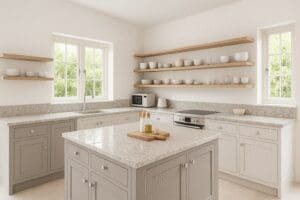
They come in so many styles. If your worktop is quartz, your upstand will be quartz. That’s the beauty of it. You get that perfectly matched aesthetic. It creates a cohesive design and it is a very modern choice. Plus, it gives your kitchen a sleek, contemporary feel.
Furthermore, it is all about finishing details. An upstand is a practical detail. But it’s also a highly stylish one that makes your kitchen feel complete. It ties everything together and adds that touch of sophistication. You will love how it transforms your space. In simple words, it is a simple addition, but it has a massive impact.
What Is The Purpose Of An Upstand?
The upstand isn’t just for show. It serves some really important purposes in your kitchen. Let’s mention a few solid reasons for using it.
Act as a Seal Against Walls
First off, it acts like a seal. It creates a barrier between your worktop and the wall. This means no more liquids or crumbs sneaking behind your cabinets. That’s a big win for cleanliness.
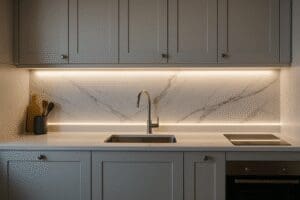
Think about it. You’re chopping vegetables. Water splashes. A few crumbs fall. Without an upstand, those things would go straight down the back. Then you’d have a mess. An upstand stops all that and keeps everything neat and tidy on your worktop.
Hides Imperfections
Another great thing about upstands? Walls are rarely perfectly straight. It’s just how houses are built sometimes. If you put your worktop right against an uneven wall, you’d see gaps. It wouldn’t look good.
The upstand cleverly hides these imperfections. It makes everything look seamless and professional. Even those small expansion gaps in your worktop become invisible.
Keep Your Walls Clean
Upstands also protect your walls. When you’re cooking, oil can splash. When you’re washing dishes, water can spray. Your wall takes a beating.
But with an upstand, your wall stays clean. The upstand is much easier to wipe down than a painted wall. Just a quick swipe, and it’s spotless.
Create a Smooth Look
Finally, upstands are also about aesthetics. They connect your worktop to your wall visually. It creates a softer, more finished look. It’s less stark than just having your worktop end abruptly. It adds a touch of design flair. Plus, it makes your kitchen feel complete and well-thought-out. So, it’s practical, protective, and pretty all at once.
So, why do you need an upstand?
A quartz kitchen upstand and splashback is not just for looks, though it certainly helps with that. An upstand creates a vital seal. It sits between your worktop and the wall. This seal stops all those little kitchen mishaps. Think about liquids. Think about crumbs. They won’t fall behind your cabinets anymore. That’s a huge plus for cleanliness.
Walls are rarely perfectly straight. It’s just a fact of home construction. An upstand is a clever solution for this. It helps to make everything look neat and finished. It hides any small gaps between your worktop and the wall. These gaps can be there for expansion, or just because of wall imperfections. The upstand covers them beautifully.
Cooking can be messy. Doing dishes can be messy. Splashes happen all the time. That’s where your upstand acts as a shield. It protects your wall from all that action. And here is the best part: it is much easier to clean an upstand than to scrub down a painted wall. A quick wipe, and it is sparkling again.
Thus, a DIY kitchen upstand is about both function and style. An upstand delivers on both counts. It protects your kitchen and makes cleaning easier. And it dramatically improves the overall aesthetic. In short, it is a smart choice for any DIY kitchen.
What Is The Distinction Between A Splashback And An Upstand?
You can hear “splashback” and “upstand” used interchangeably. But they are definitely not the same thing. There is a key difference, and it mostly comes down to height. Knowing which one you need depends on your kitchen and your cooking style. Let’s break down the difference between splashback and upstand easily for you in this table.
| Feature | Splashback | Upstand |
| Primary Height | Taller than 200 mm | Shorter than 200 mm (usually 60-150 mm) |
| Placement | Behind hob, sometimes sink | Along entire worktop edge |
| Main Purpose | Intensive splash protection | Wall protection, neat finish |
| Visual Impact | Dominant feature | Subtle border |
| Cleaning Ease | Very easy to wipe | Easy to wipe |
| Material Needs | Can be different from worktop | Usually matches worktop |
| Installation | Often a focal point | Seamless worktop extension |
| Wall Coverage | Covers larger wall area | Covers lower wall area |
| Design Role | Can introduce new material/color | Creates continuous look |
| Typical Styles | Glass, stainless steel, tiles, worktop material | Worktop material |
| Mess Prevention | High-level protection | Low-level protection, crumb barrier |
| Gaps Covered | Minimal concern | Hides small worktop-to-wall gaps |
So, there you have it. Both splashbacks and upstands protect your walls and add to your kitchen’s look. But they serve slightly different functions. Choose an upstand for that sleek and continuous line and basic wall protection. Opt for a splashback when you need more robust defense against serious cooking splatters.
Tiling Above Quartz Kitchen Upstand; Is It A Good Idea?
Absolutely, you can. Tiles are a classic choice for kitchen walls, especially where you need extra protection, like behind your cooker hob. They are super practical for handling splashes. However, an upstand offers a different kind of aesthetic. It really helps your worktop blend seamlessly into the rest of your kitchen.
It gives a very clean and continuous line. If you love the look of tiles, you can certainly install them directly above your upstand. This combines the best of both worlds: the sleek finish of the upstand with the added texture and protection of tiles. It is all about creating the look you love for your kitchen.
Aesthetic Enhancement
Want to make your kitchen truly stand out? Tiling above your upstand is a fantastic way to do it. It’s not just about protection; it’s about making a statement. Tiles let you bring in so much more than just a solid color. You can play with different colors, add unique textures, and introduce eye-catching patterns. This is your chance to really boost your kitchen’s overall design. It makes the whole space feel more interesting and visually appealing.
Continuity In Design
You are looking for a kitchen that flows perfectly. Extending tiles from your worktop right up the wall does just that. It creates a wonderful sense of continuity in your design. Everything links together seamlessly. This isn’t just about individual elements; it is about the bigger picture. You get a truly cohesive look. The result? A kitchen that feels perfectly coordinated and incredibly pleasing to the eye.
Customisations and Style
Your kitchen should reflect you. And tiling offers incredible customization and style options. You’re not stuck with just one look. You can pick tiles that perfectly match your kitchen’s vibe. Going for something modern in your DIY kitchens? There are tiles for that. Love a traditional feel? Plenty of options. Want something uniquely eclectic? You’ll find it. This is your moment to truly express your personal taste. It’s your chance to make a bold design statement.
Increases Property Value
Are you thinking about your home’s worth? A well-designed, functional kitchen is a huge asset. Tiling above the upstand isn’t just about looks for you right now. It’s a feature that really boosts your home’s appeal. Potential buyers notice these details. It shows thought and care. This smart addition can definitely add value to your property. It makes your kitchen stand out as a major selling point.
Either Install A Splashback Or Tiling Over An Upstand?
So, the big question is: Do you install a splashback or just tile over an upstand? This is purely your call. There’s no single “right” or “wrong” answer here. It truly comes down to what you think will look best and function best in your kitchen, for your lifestyle.
You can find that if you are installing a full-height glass splashback or tiling the whole wall, you probably won’t need an upstand. It just wouldn’t make sense visually. However, an upstand definitely makes sense elsewhere if you are only putting in a small glass splashback, say, just behind the hob, or some feature tiles in that area. It bridges the gap along the rest of your worktop.
No matter what you decide, the important matter is to make sure something is forming a seal between your worktop and the wall. That barrier is essential for keeping out crumbs and liquids. You don’t want anything sneaking behind your cabinets.
Another thing to consider is the depth. Your upstand is usually around 20mm thick. Tiles or a glass splashback are typically thinner. This means you will end up with a small ledge where the upstand meets the tiling or splashback. It is not a problem at all, just something to visualize. Just think about how that slight difference in thickness will look. It is purely an aesthetic consideration when you’re making your final decision.
What are the Advantages Of Installing A Quartz Kitchen Worktop Upstand?
Once your new kitchen worktops are in, it’s time for those final touches. A kitchen worktop upstand is a truly essential accessory. It does so much more than just look good. It helps to seamlessly blend your countertops with the walls. This creates a beautiful, finished look for your entire kitchen. Plus, it serves several other important functions, making your kitchen both more attractive and more practical.
Cover An Uneven Wall With A Kitchen Quartz Worktop Upstand
Sometimes, your walls just aren’t perfectly straight. It’s a common issue in many homes. But don’t worry, your kitchen worktop upstand is not just a pretty addition; it is a brilliant problem-solver. It can actually cover those uneven sections where your perfectly straight worktop meets a less-than-perfect wall.
Here is a tip for installation: you should attach the upstand directly to the wall. Use a really good adhesive for this. This way, your worktop can still flex and move slightly underneath if it needs to. It is a small detail, but it ensures everything stays looking great and performs well over time. So, that quartz upstand is more than just a decorative piece; it is genuinely functional.
Tiling Is A Great Alternative To Worktop Upstands
Some people automatically think of tiles for kitchen walls. And yes, tiling is a great alternative to worktop upstands in many situations. They are definitely practical for protecting walls, especially in high-splash areas like behind your cooker hob. However, we really feel that an upstand creates a different, often more appealing, look.
It helps to seamlessly blend your worktop right into the kitchen. Above all, it is about creating a continuous, flowing line. Of course, you don’t have to choose one or the other. If you love tiles, you can absolutely use them above your upstand. This gives you the best of both worlds – the sleek finish of the upstand and the added texture and protection of tiles.
Upstands Are Simple To Install
You will love this: upstands are truly simple to install. Now forget the fuss of tiling. Our quartz worktop upstands are incredibly easy to cut to the exact size you need. Then, you can install them in practically any kitchen. What if you are using our solid surface up stands?
They just need a quick and light treatment before you put them in place. That’s it. And if you ever need to trim them down or refinish an edge, it is very easy. Just use a worktop edging strip. It is all designed to be DIY-friendly. You will have them fitted perfectly in no time.
Cost-Effective Solution
When you are planning your kitchen budget, every detail counts. Upstands are often a much more cost-effective solution compared to tiling an entire wall or installing a large splashback. You are using less material.
Plus, the installation process is generally quicker and less complex. This means you save money on both materials and labor. In simple words, it is a smart way to get a polished, high-quality finish without breaking the bank.
Seamless Integration with Quartz
Choosing a quartz upstand means you are embracing seamless integration with your quartz worktop. Remember, this is not just about matching colors. It is about achieving a perfectly uniform look. Quartz worktops offers incredible consistency in its pattern and finish.
When your upstand is made from the same quartz, it literally looks like an extension of your worktop. There are no distracting breaks in material or texture. This creates a beautifully continuous flow around your kitchen. It is a sophisticated choice that speaks to modern design and attention to detail, making your kitchen feel incredibly cohesive and polished.
Enhanced Hygiene
Keeping your kitchen clean and hygienic is always a top priority, right? Well, a quartz upstand significantly helps with that. Because quartz is a non-porous material, it doesn’t absorb liquids. This means spills and splashes won’t seep into the material or behind your cabinets.
There are no tiny cracks or crevices for food particles, moisture, or bacteria to hide in. This makes cleaning incredibly easy; a quick wipe is often all you need. This non-porous surface actively resists the growth of mold, mildew, and harmful bacteria. It contributes to a healthier and safer food preparation environment for you and your family.
Timeless Aesthetic
Trends come and go, but a well-chosen kitchen design endures. A quartz upstand offers a timeless aesthetic that won’t quickly feel dated. Quartz itself has a classic and elegant appearance.
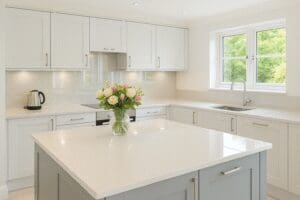
And when quartz is used as an upstand? It provides a clean, understated finish. It avoids the busy look that some tiling patterns can create over time. This means your kitchen will maintain its sophisticated appeal for years to come. It gives you lasting satisfaction and potentially adds to your home’s long-term value.
How to Seal Quartz Kitchen Upstands?
Quartz is amazing. It is super durable and famously non-porous. This means, strictly speaking, you don’t need to seal the quartz kitchen up upstands in the same way you would natural stone like granite or marble. Quartz worktops manufactured with resins that make it highly resistant to stains and moisture from the get-go. So, you can relax a bit about traditional sealing.
However, when people talk about “sealing” upstands, they are often referring to creating a strong and water-tight bond where the upstand meets the wall and the worktop. This is about preventing water ingress and keeping everything looking neat. Let’s walk through that process.
How to “Seal” Your Kitchen Upstands (Creating a Tight Seal)?
You will want to make sure the bond between your upstand, wall, and worktop is robust and waterproof. Actually, this is not about applying a liquid sealant to the quartz surface itself, but about using the right products to join everything together.
Step 1: Gather Your Tools and Materials
Before you start, get everything ready. You will need:
- High-quality silicone sealant: Choose one that’s specifically for kitchens or bathrooms. It should be mold-resistant and waterproof. A clear or color-matched silicone will give the best finish.
- Caulking gun: For applying the silicone.
- Painter’s tape (low tack): This helps you create clean, straight lines.
- Methylated spirits or isopropyl alcohol: For cleaning surfaces.
- Clean clothes: For wiping.
- Utility knife or sharp blade: For opening sealant tubes and trimming excess.
- Silicone smoothing tool or an old credit card: For a smooth finish.
- Gloves: To keep your hands clean.
Step 2: Ensure Surfaces Are Clean and Dry
This is crucial for a good bond. Make sure the edge of your quartz upstand, the adjacent wall surface, and the top edge of your worktop are all spotlessly clean and completely dry.
You can use methylated spirits or isopropyl alcohol on a clean cloth to wipe away any dust, grease, or debris. Let it air dry completely. Any moisture or dirt will prevent the silicone from adhering properly.
Step 3: Apply Painter’s Tape for Crisp Lines
For a professional-looking finish, apply painter’s tape along both sides of where you’ll be applying the silicone bead. This means one strip on the wall, just above where the upstand will sit.
Then, use another strip on the worktop, just below the top edge of the upstand. This creates a neat channel for your silicone. However make sure the tape is pressed down firmly to prevent leakage.
Step 4: Apply the Silicone Sealant
Cut the nozzle of your silicone tube at a 45-degree angle. Make the hole size appropriate for the bead you want. Place the tube into your caulking gun. Apply a continuous, even bead of silicone along the joint where the upstand meets the wall.
Then, apply another bead where the upstand meets the worktop. Try to maintain consistent pressure on the gun for a smooth, even flow. Don’t apply too much, as excess is harder to clean.
Step 5: Smooth the Silicone Bead
Immediately after applying the silicone, use your silicone smoothing tool (or an old credit card/gloved finger) to gently smooth the bead. Work in one continuous motion if possible. This pushes the silicone into the gap and creates a neat, concave finish. Remove any obvious excess as you go.
Step 6: Remove the Painter’s Tape
This is an important step for a clean line. Carefully and immediately remove the painter’s tape while the silicone is still wet. Pull it away slowly and at an angle. If you wait for the silicone to dry, it might tear and ruin your neat line.
Step 7: Allow for Curing Time
In the final step, check the manufacturer’s instructions on your silicone sealant for specific curing times. Generally, it will be touch-dry within an hour or two, but it needs a full 24-48 hours to fully cure and achieve its waterproof properties. Avoid exposing the area to water during this curing period.
By following these steps, you will create a professional and watertight seal around your quartz upstands. It ensures longevity and a beautiful finish for your kitchen.
Is It a Good Idea to Install Kitchen Upstands On Your Own?
Is tackling kitchen upstands on your own a good idea? While the DIY spirit is fantastic, and you’re certainly capable of a truly flawless and lasting finish, professional help is often the smarter choice.
Getting that high-end look with materials like quartz demands precision. Professionals like us, Stoned Collective, will bring specialised tools, extensive experience, and an eye for detail to handle things like uneven walls, perfect cuts, and critical sealing. We ensure your upstand is installed not just beautifully, but correctly, preventing future issues.
We understand the desire to do it yourself, but for results that stand the test of time and look impeccable, a professional touch makes all the difference. We recommend seeking out experienced installers to ensure your kitchen project is completed to the highest standard.
Frequently Asked Questions
What is an alternative to a worktop upstand?
If you are not going for an upstand, the main alternative is a splashback. You can take it as a taller version of quartz upstand. Instead of just a short strip, a splashback covers the entire wall space between your worktop and your upper cabinets. It is especially popular behind the hob or sink, offering maximum protection from cooking splashes. You can use tiles, glass, or even the same material as your worktop for a splashback. It is a bigger statement and provides more extensive wall coverage.
What is the gap between the upstand and worktop?
When you are installing a solid wood worktop, you need to leave a small expansion gap. This is really important. We are talking about 4-5 mm between your worktop and the wall. Wood naturally expands and contracts with changes in temperature and humidity. That gap gives it room to “breathe” without causing problems. Your upstand then sits on the wall, covering this gap beautifully. So, the upstand is always tightly stuck to the worktop and bridges that necessary space. This ensures your worktop stays flat and stable for years.
What is the best overhang for a worktop?
You are asking about the best overhang for your worktop. This is important for both looks and function. Ideally, you are aiming for an overhang of about 300mm. This gives you enough space for comfortable seating if it is a breakfast bar, or simply a nice finished edge.
Now, if you are using laminate worktops, you have a bit more flexibility. You can extend that overhang up to 600 mm. But there is a crucial point here: you absolutely need additional support if you go beyond 300 mm with laminate. This prevents sagging and ensures your worktop remains sturdy. So, think about how you will brace it properly for anything over 300 mm.
Send Your Inquiry Here And Get A Free Quote:
Ready to transform your kitchen with stunning quartz upstands? We know you are keen on DIY, and that’s exactly what we specialise in here at Stoned Collective. We are passionate about helping you achieve that professional and high-end finish all on your own.
Our quartz upstands are designed for easy installation, giving you that seamless look you have been dreaming of. No more worrying about uneven walls or tricky installations. We provide the quality materials that make your DIY project a breeze.
If you have any questions or you are ready to get started, do not hesitate. We are here to help you every step of the way.
Get Your Free Quote Today!
Ready to get a precise quote for your DIY kitchen worktop and upstand project? It is easy with the help of our expert team!
Call us at: 03332421415
Email us at: [email protected]
You can also reach us on mobile at: 07432065334
We look forward to hearing from you and helping you create the kitchen of your dreams.