
Why Quartz Worktop Joints Turn Yellow Over Time

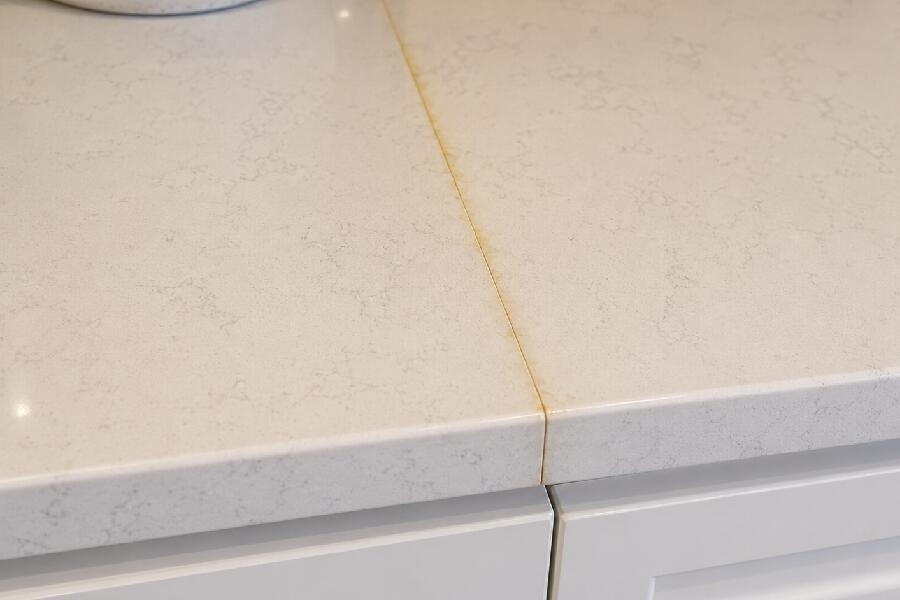
You install a beautiful new quartz kitchen worktop, and everything looks perfect at first.
Then months later, something starts catching your eye.
The joints between the quartz slabs suddenly appear slightly yellow, darker, or discoloured compared to the rest of the surface.
This is actually a very common concern in modern kitchens.
A lot of homeowners browsing stonedcollective ask questions like:
- “Why are my quartz joins turning yellow?”
- “Can quartz seams stain?”
- “Do white quartz joints discolour over time?”
- “Is yellowing normal on quartz worktops?”
The good news is that the quartz itself is usually not the problem.
In most cases, the yellowing comes from adhesives, UV exposure, grease buildup, heat, or incorrect cleaning products rather than the actual stone surface.
Quartz Joints Are Different from the Slab Itself
This is the first thing many homeowners do not realise.
The visible join between quartz slabs is normally filled using:
- Resin adhesives
- Colour-matched epoxy
- Bonding compounds
- Silicone materials
Even though installers carefully colour-match these materials, they do not always age exactly like the quartz surface itself.
Over time, joints may react differently to:
- Sunlight
- Heat
- Moisture
- Grease
- Cleaning chemicals
That slight difference is usually what creates yellowing or darker seam lines.
Sunlight and UV Exposure Are Major Causes
Direct sunlight is one of the biggest reasons quartz joints start turning yellow.
UV rays can slowly affect certain resins and adhesives over time, especially in kitchens with:
- Large windows
- Skylights
- South-facing layouts
- Bright open-plan designs
White quartz surfaces often make this issue more noticeable because the contrast becomes easier to see.
Heat Around Hobs Can Discolour Quartz Joints
Heat exposure is another major factor.
The area around hobs and cookers experiences constant temperature changes throughout the year.
Over time, excessive heat may slightly affect resin-based joint materials, causing them to:
- Yellow
- Darken
- Dry out
- Become more visible
This is especially common in kitchens where extremely hot pans are regularly placed near seams.
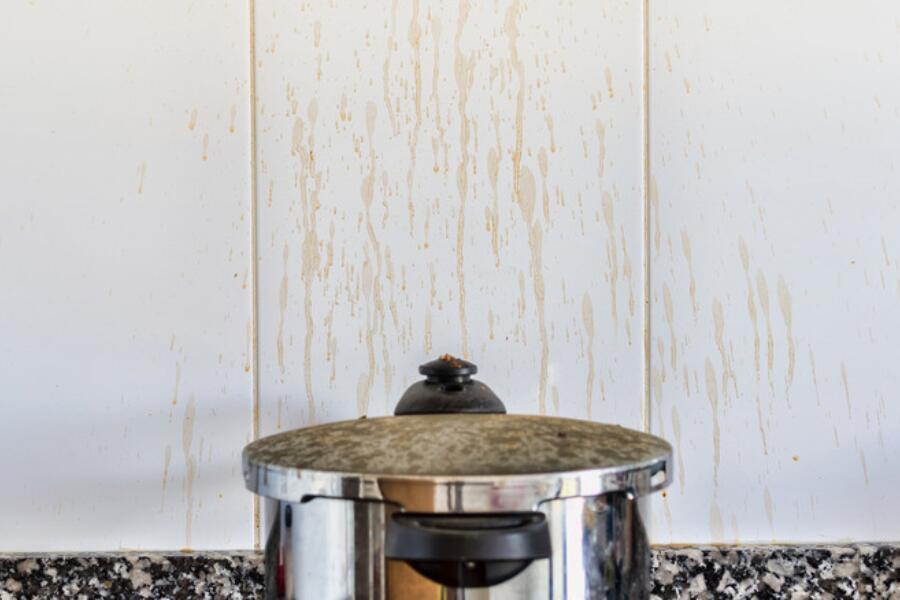
Grease and Cooking Residue Build Up Around Seams
Kitchen joins naturally collect more residue than flat surfaces.
Tiny seam lines can trap:
- Oil
- Cooking grease
- Dust
- Food particles
- Moisture residue
Over time, this buildup creates yellow or brown discolouration, especially on lighter quartz colours.
This problem becomes more noticeable near:
- Hobs
- Splashbacks
- Sink edges
- Breakfast bar joins
Regular gentle cleaning usually prevents most of this buildup.
Harsh Cleaning Products Can Damage Joint Materials
Many homeowners accidentally make the problem worse while trying to clean it.
Strong chemicals may slowly damage resin joints or alter their colour over time.
Products that commonly cause problems include:
- Bleach
- Oven cleaners
- Abrasive sprays
- Strong degreasers
- Acidic cleaners
This is one reason quartz maintenance matters more than people expect.
Articles like Quartz Stain Remover Guide explain safer ways to clean quartz surfaces without damaging seams or finishes.
White Quartz Shows Yellowing More Easily
This part is a simple visual contrast.
Cream, beige, or darker quartz often hides joint ageing much better.
Bright white quartz, meanwhile, makes even small colour changes highly noticeable.
That does not mean white quartz is a bad choice. It simply means that maintenance and installation quality become more important.
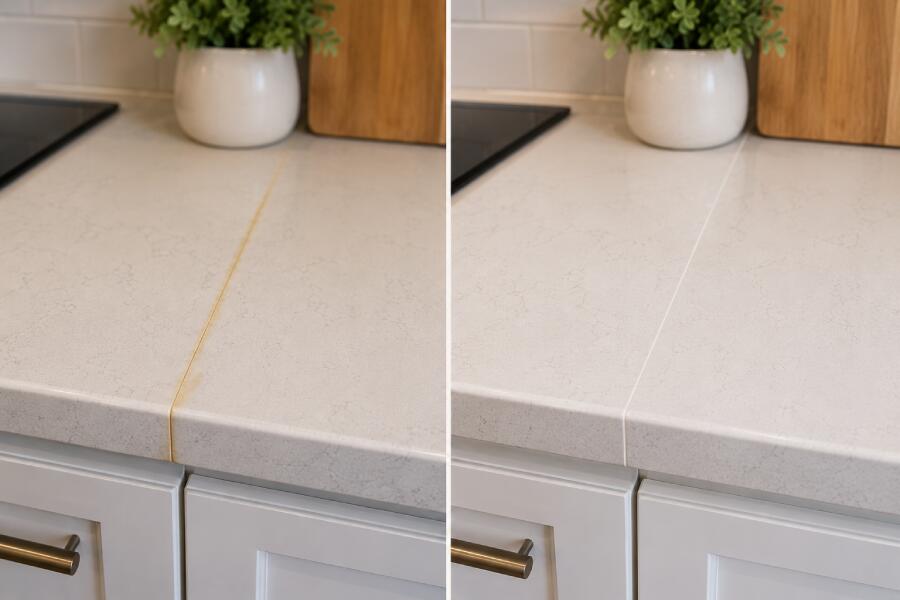
A customer recently contacted the showroom after noticing slight yellowing around a white quartz island join near the hob area. After inspection, the quartz itself remained perfect. The issue came from cooking grease combined with heat exposure around the seam line. After professional cleaning and resealing, the joint looked dramatically cleaner again.
Can Yellow Quartz Joints Be Fixed?
In many cases, yes.
Minor yellowing can often improve with:
- Professional cleaning
- Resin touch-ups
- Joint refinishing
- Seam recolouring
However, severe UV damage may sometimes require partial joint replacement.
The earlier the issue is addressed, the easier it usually is to improve the appearance.
How to Prevent Quartz Joints from Turning Yellow
The best approach is prevention.
Simple habits make a huge difference long term:
- Clean spills quickly
- Avoid harsh chemicals
- Use heat protection
- Reduce grease buildup
- Keep seams dry near sinks
- Use experienced installers
Homeowners also increasingly compare quartz quality and fabrication standards before buying.
Helpful related guides include:
Final Thoughts
Quartz joints sometimes turn yellow because seam materials react differently to heat, sunlight, grease, and cleaning products than the quartz surface itself.
The good news is that this issue is usually cosmetic rather than structural.
In most kitchens, proper cleaning, careful maintenance, and quality installation dramatically reduce the chances of noticeable yellowing over time.
And if you are still comparing quartz styles, colours, or installation options, the team at get a quote can help you choose surfaces and seam layouts that stay cleaner and less visible long term.
Frequently Asked Questions
- Why are my quartz joints turning yellow?
Yellowing usually comes from UV exposure, heat, grease buildup, or ageing resin adhesives rather than the quartz itself. - Can yellow quartz seams be cleaned?
Yes. Mild yellowing often improves with professional cleaning or seam refinishing. - Do white quartz worktops show joints more?
Yes. White quartz makes seams and colour changes more noticeable because of the strong contrast. - Can heat damage quartz joints?
Yes. Constant heat exposure near hobs can gradually affect seam materials over time. - Are quartz joints supposed to be invisible?
Not completely. Good installation minimises joins, but most quartz worktops still have slightly visible seam lines.