
Quartz vs Laminate Worktops: Best Choice UK 2026

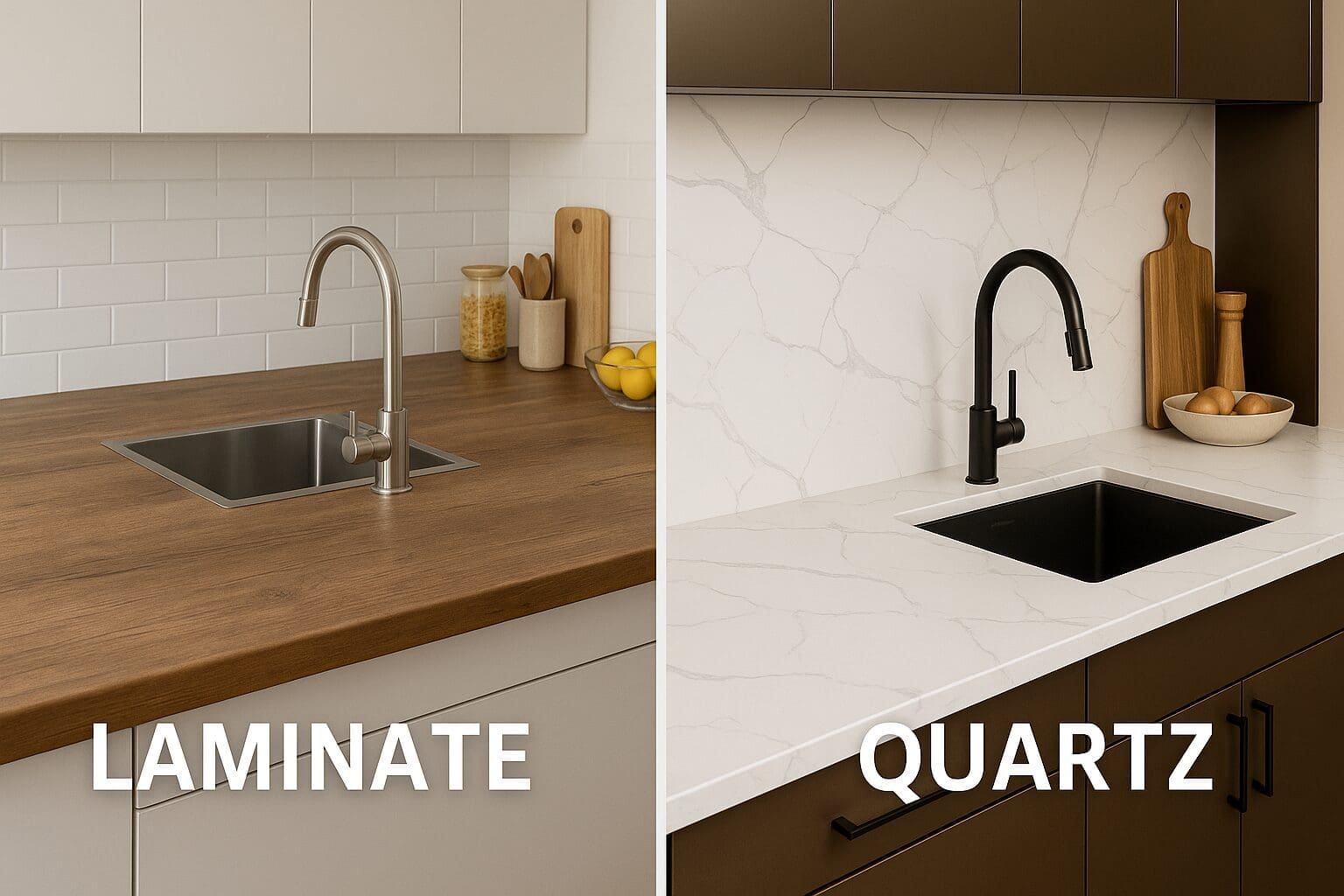
When you are choosing new kitchen worktops, you are likely weighing up popular options like Quartz and Laminate. Both offer different benefits, but which one is the better choice for your home and budget? This is the real question that needs your attention. This guide dives deep into the comparison. We will explore key features, from durability and appearance to cost and maintenance, to help you understand the actual differences.
Get ready for a straightforward look at Quartz vs. Laminate worktops to make your decision easier. So…let’s find out which material comes out on top!
Is Quartz Worktops Better Than Laminate?
Customers of DIY quartz worktops are always torn between two options: quartz and laminate. Both types of worktop materials have their own lists of pros and cons. But, one of the fundamental questions that you will always encounter, especially if you are living in the UK, is: “Is quartz worktops better than laminate?”
Hmm…let’s answer this quarry directly here.
Yes, quartz countertops are better than laminate. These high-quality and smooth quartz worktops are considered superior to laminate worktops. Credit goes to the enhanced durability and resistance to stains, scratches, and heat of quartz. Besides that, their non-porous nature makes them more hygienic and requires less maintenance.
So, it is proven that quartz has always been a better option as compared to laminate worktops. In the next section, we are going to share a detailed overview of why quartz is better than laminate.
Quartz vs. Laminate: Top 15 Features Compared
Let’s follow the footprints of this guide to find who wins when we compare the top 15 features of the best worktops with quartz and laminate materials.
Manufacturing
How are these worktops actually made? Their creation process is completely different and affects everything about them. Let’s see how they stack up.
Quartz
Quartz worktops are the trendiest engineered stone. They start with natural quartz crystals, one of the hardest minerals around. These crystals are crushed and then mixed with strong resins. Pigments are added to give them colour.
This mix is pressed into slabs using intense pressure and vibration. The resins bind everything together, creating a very hard, non-porous material. Thus, it is a high-tech process that results in a consistent and durable product.
Laminate
On the flip side, laminate worktops are a layered product. They are made by bonding several layers together. The core is usually particleboard or MDF. On top of this core goes a decorative paper layer printed with a pattern or colour.
This paper is protected by a clear, tough plastic layer called the overlay. Then, these layers are all bonded together using heat and pressure. It is a much simpler process than making quartz.
Who Wins?
The manufacturing process creates fundamental differences in the final product. In the battle of quartz and laminate, quartz is the winner. It is an engineered stone versus layers of paper and plastic. You can find out more why this matters!
Aesthetics
How do these materials look in your diy kitchens? After all, appearance is a huge factor. Let’s explore the design options they offer.
Quartz
According to the demanding use of quartz worktops, one thing is clear that it offers incredible design flexibility. Because they are engineered, manufacturers like DIY Kitchens Worktop can create almost any colour or pattern you can imagine. They add pigments during the manufacturing process.
That’s how they easily get vibrant solids, subtle shades, and complex designs. Quartz can even perfectly mimic the look of natural stone like marble or granite. This control means you can find a quartz worktop to match any kitchen style, from ultra-modern to classic. Thus, there are endless options when you are looking for different options in terms of designs, patterns, and colours.
Laminate
On the other hand, laminate kitchen worktops provide a vast array of visual choices, too. The decorative layer is essentially a high-resolution photograph or design printed onto paper. This means laminate can replicate the look of many materials.
It could be wood, stone, concrete, and abstract patterns. This shows you can find laminates in countless colours and textures. Although it mimics other materials, it doesn’t have the depth or feel of real stone. However, the enormous and updated variety of prints are available with new trends.
Who Wins?
For the ultimate control over colour and pattern, one material has the edge. Quartz wins because being engineered allows for more creative control and a wider range of unique designs. But laminate offers a huge variety of printed looks.
Heat-Resistant
Can you put a hot pan down without worry? How these materials handle heat is very important to consider in a working kitchen. Let’s see which one is tougher against high temperatures.
Quartz
Quartz worktops handle heat very well for your most kitchen tasks. Actually, the natural quartz crystals are very heat resistant. However, the resins that bind the quartz together are not.
It can start melting our moulding whenever you place extremely hot pots or pans directly from the hob or oven onto quartz. This can cause permanent discoloration, scorching, or even cracking.
Important Note: It is always best practice to use a trivet or hot pad to protect your quartz surface from direct, intense heat sources.
Laminate
Laminate worktops are much more sensitive to heat than quartz countertops. The plastic overlay and the adhesive layers can easily melt or blister when exposed to hot items.
Moreover, it can cause irreversible damage when you place a hot pan or even a hot dish directly on laminate. As a result, it leaves behind ugly burn marks or cause the layers to separate (delaminate). Again, it’s essential to use a hot pad or trivet to protect laminate slabs from heat.
Who Wins?
When it comes to handling heat, one material is clearly more robust. It is Quartz. Laminate is very heat sensitive and can easily be damaged or delaminate from hot items.
Stain-Resistant
Spills happen in every kitchen. But the question is: How well do these surfaces handle drips and drops from food and drinks? Your choice of worktop material will keep it stain resistant. It will keep your worktops look good for years and decades.
Quartz
Quartz worktops are fantastic options if you are searching for a countertop that resists stains. That’s why they are engineered as completely non-porous surfaces. This means liquids like wine, coffee, oil, and food colouring cannot soak into the material.
Moreover, spills just sit on the top surface without penetrating on its densities. All it takes is a simple wipe with a damp cloth and mild soap to clean them up. Plus, you don’t have to rush to clean every little spill. This non-porous quality makes quartz incredibly hygienic and stain-proof under normal use.
Laminate
Contrarily, laminate countertops are also quite stain-resistant on their surface. The tough plastic overlay provides a good barrier against most everyday spills. Liquids don’t easily penetrate the top layer.
However, the core material underneath is not waterproof. If liquids get into seams, edges, or any damaged areas like chips or scratches, they can be absorbed. This can cause swelling, discolouration, and permanent stains that are impossible to remove.
Who Wins?
When it comes to keeping stains away, one material is much more reliable. Quartz wins! Its non-porous surface completely blocks stains, while laminate can be vulnerable at edges and seams.
Water-Resistant
How do these worktops handle water? It is important to find the answer to this question. This is because kitchens and bathrooms are wet places. So, your worktops must handle splashes and spills without getting damaged.
Quartz
Quartz worktops are excellent with water. They are made using quartz crystals and resins that can create a completely non-porous surface. This is why water cannot soak into quartz. You can spill liquids on it, and they will just sit there until you wipe them up.
This makes quartz ideal for areas around sinks and taps where water is always present. Its structure prevents water damage like swelling or warping. Its slabs ensure long-term durability in wet environments.
Laminate
Laminate’s core material, usually particleboard or MDF, is very vulnerable to water. Now, you will say that the top surface is water-resistant. That’s true, but the edges and seams are weak points. If water seeps into these areas, the core material will swell and break down.
So, this causes the laminate layers to lift and separate. Once water damage occurs in laminate, it is irreversible. In simple words, it will ruin the entire worktop. You must be very careful to protect edges and seams from moisture.
Who Wins?
One material is far superior for handling water confidently. Definitely, it is quartz that wins.
Quartz vs Laminate Cost
Let’s talk about your wallet! The price tag is often a major deciding factor. So, let’s answer how much do these two materials typically cost?
Quartz
Quartz worktops are a bit expensive material as compared to laminate. After all, they are considered a premium and high-quality material. The cost reflects the engineering process and the high percentage of natural quartz.
Prices vary based on colour, pattern complexity, and brand. We know that it is more expensive than laminate but quartz offers the look and feel of natural stone. It provides long-term durability and low maintenance, which can save money over time.
Laminate
Let’s share that laminate kitchen worktops are the budget champion. They are significantly cheaper than quartz and often cost a fraction of the price. This makes them a very popular choice for homeowners looking to update their kitchen without spending a lot.
Furthermore, the lower cost comes from the simpler manufacturing process and cheaper core materials. Laminate allows you to get a stylish look without breaking the bank.
Who Wins?
For the lowest initial cost, one material is the clear winner. Laminate wins on price! However, Quartz often wins with your money in the long run because it’s a high-quality, premium, and luxurious material that lasts. So, quartz countertops are worth your money.
Consistent Appearance
Do you want your worktop to look exactly like the sample? If yes, that’s a great idea. Consistency in appearance is a major difference between these two options: quartz and laminate. Let’s see which one gives you a predictable look.
Quartz
Quartz kitchen worktops are made for uniformity. Their manufacturing process is highly controlled. This ensures that the colour, pattern, and texture are consistent from one slab to the next. If you order multiple pieces for a large kitchen, they will match perfectly.
In simple words, what you see in the showroom sample is exactly what you will get delivered. This predictability makes planning your kitchen design straightforward. Plus, it removes any surprises about the final look.
Laminate
Laminate worktops also offer a very consistent appearance. Since the decorative layer is a printed design, the pattern is uniform across the entire sheet. Every worktop made from the same print will look identical.
This means you can easily get matching pieces or replace a section without worrying about variations. While it mimics natural materials, the pattern doesn’t have the random depth of real stone or wood grain. Still, it is reliably consistent from edge to edge.
Who Wins?
Did you want a look that is exactly as expected? Quartz wins here. Its engineered process guarantees uniformity across slabs.
Maintenance
How much work does it take to keep your worktops looking good? We are asking this question because maintenance is a big deal for busy homes. Let’s compare the maintenance-level required for each material, laminate and quartz.
Quartz
This type of man-made materials is super easy to maintain. Their non-porous surface means spills don’t soak in. You just need warm water and mild soap for everyday cleaning. No special cleaners or sealing are ever required.

This makes engineered quartz incredibly hygienic and simple to keep clean. In the end, it resists stains and bacteria growth effortlessly. So, it is a low-maintenance option that saves you time and effort.
Laminate
Laminate kitchen countertops in the UK are also fairly easy to clean on the surface. Wiping spills with a damp cloth is more than enough. However, you need to be careful about harsh chemicals or abrasive cleaners, which can damage the plastic overlay.
The main maintenance concern is protecting the edges and seams from moisture and damage. If the surface gets scratched or chipped, it is hard to repair. In fact, it can become a trap for dirt and bacteria.
Who Wins?
For hassle-free cleaning and long-term ease, one material is the clear winner. Quartz is the winner. Its non-porous surface needs minimal effort compared to laminate’s vulnerabilities.
Durability
How well will your kitchen worktop hold up over time? We are going to answer this query to solve a battle of quartz vs laminate. Moreover, durability is the main factor to count for kitchen slabs and surfaces. After all, they get used every day. So, let’s compare the toughness of these two materials.
Quartz
Quartz is extremely durable. It is made mostly of natural quartz crystals, which are very hard. The engineering process harden these crystals more tightly with resins. This creates a dense and tough surface.
As a result, it resists scratches, chips, and cracks very well. It can handle the bumps and impacts of daily kitchen life. You can expect a kitchen quartz worktop to last for many years without showing significant wear.

Read More: Can You Put Hot Pans on Quartz?
Laminate
When it comes to durability, laminate is less durable than quartz. Its strength comes from the bonded layers, but the core material is softer. The plastic top layer can easily get scratched or chipped by sharp objects.
Once the top layer is damaged, the core is exposed and vulnerable. Not only that, edges and seams are particularly prone to damage. Also, laminate can get damaged by heat, as we discussed. It won’t handle heavy use or accidents as well as quartz.
Who Wins?
For long-lasting toughness and resistance to damage, one of our demanding material stands out. Quartz wins here. Yes, it is highly durable, while laminate is less durable and more prone to damage.
Sustainability
How do these materials impact our beautiful planet? Let’s think about environmental friendliness as it is important for many homeowners today. It’s time to look at the sustainability of quartz and laminate.
Quartz
Quartz worktops have always been known as the best materials in terms of sustainability. Its main ingredient (natural quartz) is abundant. Only the process of mining and manufacturing uses energy. However, many manufacturers are incorporating recycled glass or other materials into their quartz slabs.
Quartz’s long lifespan and durability mean it doesn’t need replacing often. This reduces waste over time. Its low maintenance also means fewer harsh cleaning chemicals are needed.
Laminate
As we have mentioned before, laminate-made worktops use a core made from wood products like particleboard or MDF. These can sometimes come from sustainably managed forests or use recycled wood fibers.
However, laminate production involves plastics and resins, which are petroleum-based. Laminate also has a shorter lifespan than quartz. This means it needs replacing more frequently that leads to more waste going to landfills over time.
Who Wins?
It is not difficult to decide which is a more sustainable option. It’s a tie! Both have pros and cons for the environment but quartz wins our hearts when we talk about sustainability in comparison with laminate and other natural stones. You need to consider the raw materials, manufacturing process, and lifespan to decide which wins for you.
Best for DIY Kitchens Worktop
Are you planning to install your new worktops yourself? This is a point where these two materials differ a lot. Let’s see which one is more DIY-friendly.
Quartz
DIY installation is challenging for quartz worktops. As you know, they are extremely heavy and require professional-grade tools for cutting and shaping. The material is also dense and unforgiving. That’s why mistakes with cutting or handling can cause costly cracks or chips.
Lifting and positioning large quartz slabs safely requires multiple strong people and specialised equipment. It is recommended to hire professionals for quartz installation to ensure a perfect fit. Plus, it avoids damaging the material or injuring yourself.
Laminate
Laminate worktops are much more suitable for DIYers. They are lighter than stone or quartz. Just because of this reason, it is easier to handle and lift them. You can cut laminate using standard woodworking tools like circular saws.
But, we recommend you use specific blades to cut a clean edge. While still requiring careful measurement and handling, the risk of catastrophic damage during installation is lower than with quartz. Laminate is considered the most DIY-friendly worktop material available.
Who Wins?
Laminate wins here! It is lighter and easier to cut with standard tools. This makes it the best for DIY kitchen worktops.
Increases Resale Value
Do you have intentions of selling your home in future? Or, do you have any apartment or building that you want to sell down the road? Your kitchen countertops can influence what buyers are willing to pay. Let’s see how these materials impact your property’s value.
Quartz
Every homeowner knows that quartz worktops are a strong selling point. Buyers see quartz as a modern, high-end upgrade. It also signals quality and durability. Similarly, the low maintenance and stylish appearance appeal to many people looking for a move-in ready home.
Installing quartz makes your kitchen feel luxurious and updated. This perceived value means a higher asking price and quicker sale. It is a smart investment for boosting the market appeal of your home.
Laminate
Laminate slabs are functional and affordable. But they don’t add much resale value. Buyers recognise laminate as a budget material. While the new laminate looks clean, it doesn’t have the prestige or durability associated with stone or quartz.
It is seen as a temporary fix rather than a long-term asset. We understand that a well-maintained laminate worktop is better than an old, damaged one. But it will not give you the same return on investment as a premium surface.
Who Wins?
It’s a tie but quartz is a leader in terms of increasing sale prices of your home! It is seen as a premium upgrade that instantly increases resale value.
Zero Silica
Let’s talk about a health factor, especially for those who work with these materials. Silica dust is a serious concern in the worktop industry.
Quartz
Engineered quartz worktops typically contain a very high percentage of crystalline silica, often over 90%. Remember, there is no risk from the finished product in your home. The only risk is associated with the fine dust created when cutting, grinding, or polishing the slabs.
It can cause severe lung disease if you inhale this dust. In this case, fabricators must use strict safety measures to protect themselves from this risk. It could include wet cutting and proper ventilation.
Laminate
As we have discussed before, laminate slabs are made from layers of paper, plastic, and wood-based core materials. This shows they do not contain crystalline silica.
Therefore, cutting or working with laminate does not produce the hazardous silica dust found when fabricating stone or quartz. This eliminates the risk of silica-related lung diseases for installers and fabricators when working specifically with laminate material.
Who Wins?
When it comes to the presence of hazardous silica dust during fabrication, one material is safer. Laminate wins here! It contains zero silica. When it’s about providing zero silica quartz worktops, we at DIY Kitchens Worktop are the right manufacturers.
Repairability
Accidents happen in the DIY kitchen. What if you chip or scratch your worktop? How easy is it to fix the damage? It’s time to compare how repairable these materials are.
Quartz
Quartz worktops are made with tough slabs. There are no chances they will get chipped or damaged. Still, if they do get damaged, repairs are not tricky. You can fill small chips with a colour-matched epoxy resin.
However, deep scratches or larger chips are difficult to make disappear completely on your own. In this case, repairs require a professional. The chances are they will still leave a visible line or imperfection.
Laminate
Laminate worktops, despite being less durable overall, can sometimes be repaired for minor damage. You can fill small chips, dents, or scratches on the surface using colour-matched repair kits designed specifically for laminate (like ColorFill).
These kits can help blend the repair to make the damage less noticeable. However, major damage is not easily repairable. It could be large burns, deep cuts, or water-damaged swelling. In this case, the entire section or worktop needs replacing.
Who Wins?
Neither material is perfectly repairable, but one offers slightly better options for small fixes. It’s a close call! Although both are challenging to fix serious damage on, quartz offers easier DIY repair options for minor chips.
Edge Options
The edge profile of your counter top makes a big difference to the final look. It is a small detail that adds to the overall style. Let’s walk through the edge options available for each material.
Quartz
You can fabricate quartz worktops with a wide variety of edge profiles. As you know it is a solid material, you can cut edges and polish them into many shapes. It could be simple eased or bevelled edges or a more decorative bullnose, ogee, or waterfall edges.
Thus, it allows for a lot of customization options. In this way, you can match your desired kitchen style. The edge profile is cut directly into the quartz slab itself.
Laminate
When we talk about laminate worktops, they have more limited edge options. The traditional method involves a post-formed edge, which is a curved profile created during manufacturing. Other options include straight edges finished with a separate edge banding strip.
So, some modern laminates offer more varied edge looks. But they cannot achieve the complex, sculpted profiles possible with solid materials like quartz. The edge is often a separate piece or a molded finish.
Who Wins?
Quartz is the winner. Its solid nature allows for a much wider variety of custom edge profiles compared to laminate.
Final Score: Quartz vs Laminate
We have compared Quartz and Laminate on 15 key features. The results are clear. Quartz scored an impressive 12/15. Laminate finished with 5/15. Based on this comparison, Quartz is the superior choice for kitchen worktops. It wins on durability, maintenance, water resistance, and adding resale value. On the other hand, you can choose laminate that is budget-friendly and easier for DIY.
Quartz offers long-term benefits and a premium look. You ought to choose Quartz for a durable, stylish kitchen upgrade. Directly contact us at 03332421415,
[email protected], or 07432065334.