
Are Quartz Worktops for Kitchens Better Than Marble?

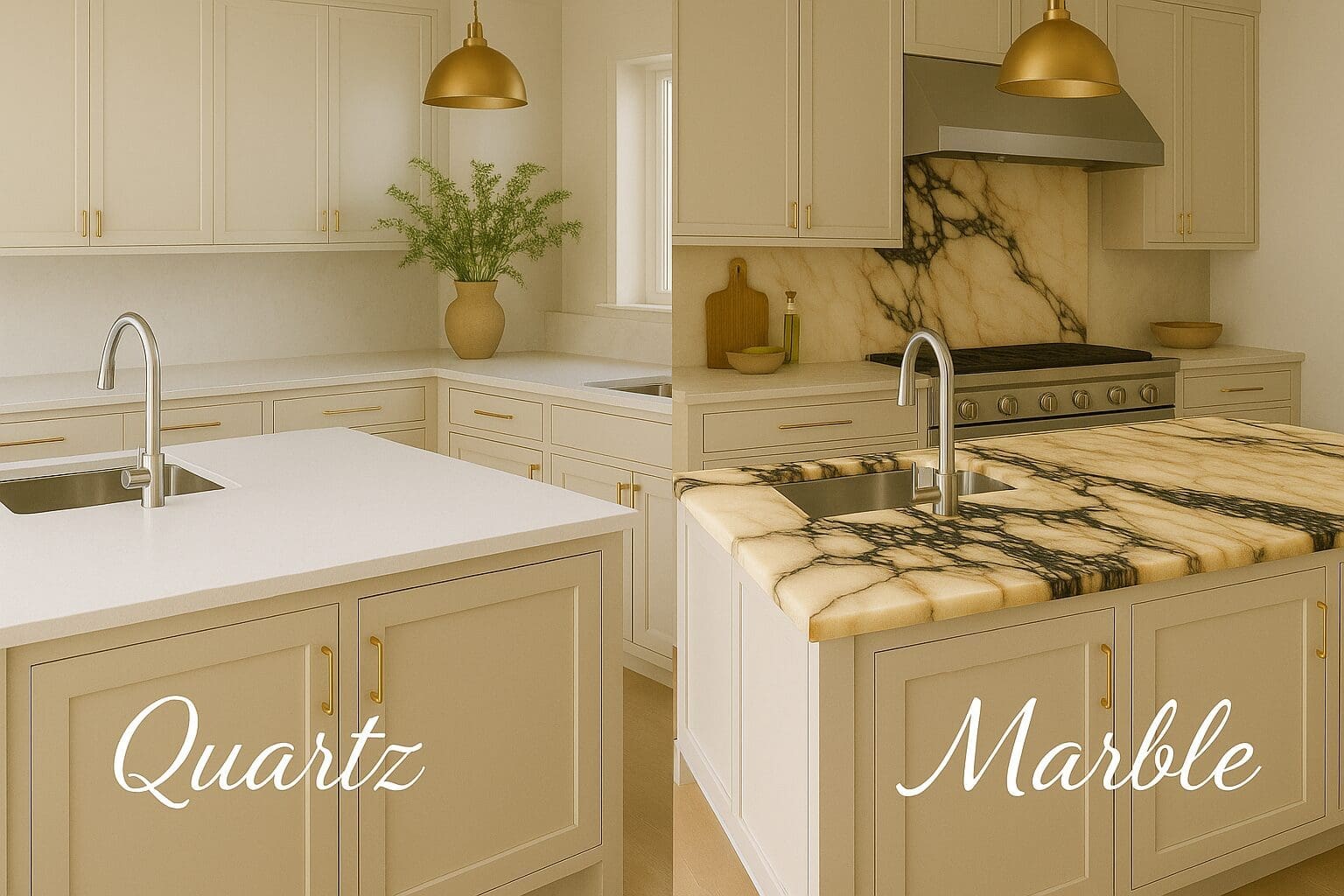
We are getting beauty, practicality, and character in our kitchens because of the installation of quartz worktops. Similarly, marble, especially Italian marble, has been part of our homes for centuries. Whenever a homeowner decides to install a new countertop in their kitchens and bathrooms, they see a common discussion on: Is Quartz Worktop for Kitchens Better Than Marble?
It is important to encounter this question, as it decides which one is better for your DIY kitchen worktop: quartz vs marble. Let’s go with the flow of this guide to get insightful information and answer this battle between quartz and marble.
Are Quartz Worktops for Kitchens Better Than Marble?
Yes, quartz countertops for kitchens are better than marble due to many reasons. Quartz worktops are durable, hygienic, easily maintainable, aesthetically pleasing, and stain-resistant. It is also non-porous and resists water, UV-rays, heat, and bacteria buildup. On the other hand, marble is naturally porous, requires regular sealing, more expensive, and less durable.
Let’s discuss the detailed, step-by-step overview in the next section. I hope you will end up deciding one of the best materials for your newest kitchen countertops and splashbacks.
Quartz vs. Marble: Top 16 Features Compared
Choosing between Quartz and Marble for your kitchen worktops? Both types of material offer stunning beauty and luxury that makes the decision tough. This guide dives deep into a head-to-head comparison. We will explore 17 parameters / features, from appearance and durability to maintenance and cost, to help you find the perfect premium surface for your home.
Let’s compare these high-end materials!
Manufacturing Process
Let’s start with how these beautiful worktops are made. Their origins are completely different, and this shapes everything about them. Let’s see the process for each.
Quartz
Quartz worktops are engineered surfaces. They are created in a factory using a mixture of different materials. The main ingredient is crushed natural quartz crystals, usually making up over 90%.
These crystals are mixed with strong resins that act as a binder. Pigments are also added in this mixture to control the colour and pattern. This mixture is then formed into slabs using intense pressure and vibration. It results in a dense, smooth, and non-porous material.
Marble
Marble is a natural stone, not an engineered slab. It is formed deep within the Earth from recrystallized carbonate minerals, most commonly calcite. Marble is quarried from the ground in large blocks.
Then, these blocks are cut into slabs using large saws. The surfaces are ground and polished to reveal their natural beauty and veining. This means each marble slab is unique, a direct product of geological processes over time.
Who Wins?
The way these materials are made is fundamentally different. Quartz wins here. It is engineered for consistency, while marble is a natural creation.
Aesthetics
When choosing worktops, how they look decides the future of your kitchen and bathroom. Both Quartz and Marble are beautiful, but they offer different kinds of beauty. Let’s explore the range of colours and patterns you can find.
Quartz
Quartz kitchen worktops give you amazing design freedom. Because they are made by engineers, manufacturers can mix pigments and materials to create almost any colour or pattern you can dream up. You can find bold solids, subtle shades, and designs.
They perfectly copy the look of natural stone, including stunning marble patterns. This control means you can easily match your worktop to any kitchen style you want. Thus, there are unlimited predictable options.
Marble
Marble offers a classic, natural beauty that is timeless. Formed by geological processes, each slab has unique veining and colour variations. You will find beautiful whites, greys, blacks, and sometimes greens or pinks.
You will always get those distinctive swirls and patterns that make marble famous. Here, every piece is a unique piece of natural art. Although the colour range is set by nature, the individual patterns on each slab are one-of-a-kind.
Who Wins?
One material from quartz vs marble has the edge for wide range and control over colour and pattern. Quartz wins here. Its engineered nature offers more variety, but the natural beauty of marble is unmatched. You can get free samples of quartz material at Stoned Collective to see how it will look in your kitchen before installation.
Heat Resistance
Can you put a hot pot straight from the stove onto your worktop? How well a material handles heat is important in a busy or rushy kitchen. Let’s compare Quartz and Marble Worktops on this factor.
Quartz
Did you know quartz worktops are heat resistant for everyday cooking? The natural quartz crystals handle heat well. However, the resin used to bind the quartz is the weak point.
Moreover, extreme heat from very hot pans can scorch, discolour, or even melt the resin. This can leave permanent marks. It is always safest to use trivets or hot pads to protect your quartz surface from direct, high heat.

Marble
Marble is a natural stone formed under heat and pressure. It is very heat resistant. You can place hot items on marble without damaging the stone itself. It handles high temperatures well.
However, like granite, the sealant applied to marble can be affected by prolonged or intense heat. This might require reapplying the sealant more often. The stone itself is tough against heat, but the finish needs care.
Who Wins?
When it comes to handling heat without any damage to the surface finish, engineered quartz is more reliable. So, quartz wins here. Although both handle heat, quartz’s resin is less vulnerable than marble’s sealant.
Stain Resistance
Kitchens are those spaces where spills happen most often. But the concern is: How well do these beautiful surfaces handle drips of wine, oil, or coffee? Considering the stain resistance factor is important for keeping your worktops looking perfect for generations.
Quartz
Worktops that are made using quartz are fantastic when it comes to resisting stains. They are engineered with resins that make the surface completely non-porous. Liquids just sit on top; they can’t soak in. It’s impossible for liquid content to get into the surface.
This means spills like red wine, juice, or cooking oil are easy to wipe away with just soap and water. You don’t have to worry about etching or deep-set stains. This non-porous quality makes quartz incredibly low-maintenance and hygienic against spills.

Marble
Marble, being a natural stone, is inherently porous. It can absorb liquids, especially acidic ones like lemon juice, vinegar, or wine. These can cause etching (dull marks on the surface) and deep stains if not cleaned up immediately.
Marble requires regular sealing to help reduce its porosity and protect against stains. Even with sealing, you need to be very careful and quick to wipe up spills to avoid permanent marks.
Who Wins?
For worry-free cleanup and stain prevention, quartz clearly comes out on top. So, quartz worktops win. Its non-porous surface makes it highly stain resistant compared to porous marble.
Consistent Appearance
Do you want a worktop that looks exactly like the sample you saw? Or do you prefer something completely unique? Consider consistency. Let’s look at how predictable the marble and quartz are.
Quartz
Quartz worktops are made with one thing in mind: Perfect uniformity. The factory process precisely controls the colour, pattern, and texture in every single slab. If you need several pieces for a large kitchen, they will match flawlessly.
In simple words, what you see in a small sample piece is exactly what the full slab will look like. This engineered consistency makes planning your DIY kitchen design very straightforward. There are no surprises with the final installed appearance.
Marble
Marble is a product of nature, so consistency is not its strong suit. Every single marble slab is unique. The veining patterns, colour intensity, and mineral deposits vary greatly from one piece to another, even within the same quarry.
You absolutely must view the actual slabs you plan to buy. The small sample will give you an idea, but the full slab will have its own distinct character. This natural variation is part of marble’s charm.
Who Wins?
Quartz wins. Its engineered process guarantees uniformity across slabs. So, if you are looking for a surface that is exactly as expected, quartz countertops are the clear winner.
Water or Moisture Resistance
How do these luxurious surfaces handle water? Kitchens and bathrooms are naturally moisture-rich areas. Your selected worktop must withstand splashes and moisture without damage. Let’s compare their resistance.
Quartz
Quartz worktops are excellent with water. The engineering process uses resins that create a completely non-porous surface. Water or moisture cannot penetrate or soak into quartz. Spills simply sit on top until you clean them.
This makes quartz an ideal choice for areas around sinks and taps where moisture is constant. Its structure prevents water damage like swelling, warping, or discolouration. This ensures it stays beautiful in wet environments.
Marble
As you know marble is a natural stone, it is also porous. This means it can absorb liquids, including water. While sealing helps, it doesn’t make marble completely waterproof. Prolonged exposure to standing water, especially at seams or edges, can potentially lead to discoloration or staining over time.
You need to be diligent about wiping up water spills promptly to protect the stone and its sealant from moisture penetration and potential damage. This description clearly shows that marble is not a water-resistant surface.
Who Wins?
For handling water confidently and without worry, one material is clearly superior. Quartz wins here! Its non-porous surface offers true water resistance, unlike porous marble.
Cost of Quartz and Marble
Let’s talk numbers. Your budget is a major player in this decision. How do the price tags of these two beautiful materials compare? Let’s break down the cost factor and see which is expensive: quartz or marble.
Quartz
Quartz worktops are the more predictable option when it comes to price. They are engineered in factories, which allows for more standardized production costs. As you know, prices vary based on brand, colour complexity, and design features.
Quartz generally sits in a premium but accessible price range. It offers a luxurious look and feel without the potential for the extreme costs associated with some natural stones.
Marble
Marble prices can swing wildly. As a natural material, its cost depends heavily on the following factors:
- Specific type of marble
- Its rarity
- Where it is quarried
- The unique patterns on the slab
Common white marbles are comparable to mid-range quartz. However, rare colours or slabs with dramatic, sought-after veining are incredibly expensive. They reach luxury price points far above most quartz options. The price reflects the uniqueness of nature’s creation.
Who Wins?
For a more consistent and lower premium price, quartz takes the lead. It is the winner. It offers luxury without the unpredictable high costs of rare natural marble. Research more if the price is right for you or not according to different designs and styles.
Level of Maintenance
How much effort will you need to put in to keep your worktops looking beautiful? Maintenance is a big factor, especially in busy homes. Let’s compare the maintenance-level required for these two types of worktop surfaces.
Quartz
Quartz worktops are known for being incredibly easy to care for. Their engineered, non-porous surface means spills don’t soak in at all. Cleaning is simple: just wipe with warm water and mild soap.
You never need to seal quartz worktops. They resist stains and bacteria growth naturally. This makes quartz a fantastic choice if you want a luxurious look without the hassle of constant maintenance.
Marble
Marble requires more care and attention. After all, it is a porous natural stone. This means it can easily stain and etch from spills, especially acidic ones.
Marble needs regular sealing, typically every few months to a year. Periodic sealing helps protect its surface. Even with sealing, you must be very careful and wipe up spills immediately.
Marble shows wear and tear more easily. Plus, it requires professional polishing over time.
Who Wins?
For keeping your worktops looking perfect with minimal effort, one material is the clear winner. We are talking about quartz. It is the low-maintenance champion compared to the demanding care marble requires.
Durability
How well will your beautiful worktop stand up to daily life in the kitchen? Durability decides it. This factor is important to consider for a surface that gets used constantly. Let’s compare the toughness of Quartz and Marble.
Quartz
According to the reviews, homeowners’ opinions, facts, and figures, “quartz worktops are highly durable.” They are made mostly from natural quartz which is reputably known as one of the hardest minerals on Earth. The resins used in manufacturing make the slabs very dense and strong.
This structure provides excellent resistance to scratches, chips, and cracks from everyday impacts. Quartz is engineered to be tough and withstand the bumps and drops that happen in a busy kitchen.
Marble
Marble is also a strong stone, but it is softer than quartz. It is more prone to scratches from knives or abrasive materials. Plus, marble can also chip or break more easily than quartz, especially around edges.
It is also vulnerable to etching from acids, which permanently dulls the surface. Although durable in many ways, marble requires more careful handling to avoid surface damage.
Who Wins?
For resisting scratches, chips, and etching from daily use, one material is tougher. And who’s that according to the above-mentioned description? Quartz wins here. It is engineered for higher durability against DIY kitchen’s wear and tear.
Suitability with DIY Kitchen Projects
Are you thinking about installing your new premium worktops yourself? This is a very important point to consider. Working with stone is hard work and requires skill. Let’s see which material is more forgiving for a DIY kitchen renovation project.
Quartz
Quartz worktops kitchens are extremely heavy. This makes them very difficult to lift and manoeuvre safely without help and special equipment. Cutting quartz requires specialized diamond blades and tools.
It is a dense material, and mistakes during cutting or handling can lead to expensive damage like chips or cracks. Still, it is slightly more predictable than natural stone. In conclusion, installing quartz is best left to experienced professionals at Stoned Collective to ensure a perfect and safe finish.
Marble
Marble is also incredibly heavy, just like quartz. But it is also more brittle and prone to chipping or breaking, especially during cutting or transport. Its natural variations can make it unpredictable to cut.
Handling large, heavy, and fragile marble slabs requires a lot of strength, precision, and expertise to avoid costly damage. DIY installation of marble is highly risky and not recommended for anyone without professional stone installation experience.
Who Wins?
Neither material is easy for DIY installation. Still, quartz wins our hearts! Although both are challenging, quartz is slightly less prone to breakage than marble. And professional installation is recommended for both. Find out why hiring experts is wise!
Edge Profile Options
The shape of the edge on your worktop is a small detail, but it impacts the overall look and feel of the kitchen. Do you want something simple, curved, or fancy? Let’s see the edge choices you get with each material we are referring to.
Quartz
Quartz worktops offer fantastic flexibility for edge profiles. Because it is an engineered material, fabricators can cut and shape the edges into many different designs. You can choose classic options like a simple eased edge or a bevel.
More decorative styles like bullnose, ogee, or even layered edges are easily achievable. This wide range of options lets you perfectly customise the look of your worktop to match your kitchen’s specific style, from modern to traditional.
Marble
Marble, being a solid natural stone, also allows for many beautiful edge profiles. Like quartz, you can cut it into various shapes such as eased, bevelled, bullnose, or ogee. The skill of the fabricator plays an important role here.
After all, the fabricator properly shapes and polishes the natural stone edge. The beauty of the stone’s natural pattern is highlighted by the chosen edge profile. You get a good selection of classic and decorative edges with marble.
Who Wins?
Both materials offer a good range of edge styles, but one of them provides slightly more engineered precision and variety. That’s quartz. Its engineered nature allows for a wider, more consistent array of complex edge profiles.
Sustainability
How do these beautiful materials impact our planet? Have you thought about environmental factors becoming more important for homeowners? Let’s look at Quartz and Marble’s sustainability story.
Quartz
Quartz has some points in their favour for sustainability. The main ingredient is natural quartz, which is one of the most common minerals found on Earth. In addition to that, other stuff that manufacturers add in it are also widely available. Many manufacturers also include recycled glass or other waste materials in their engineered slabs.
They even reuse the broken quartz, creating cheapest terrazzo tiles. But their manufacturing process uses energy even though the raw material is plentiful. Quartz’s long lifespan and durability mean it lasts a long time. As a result, it reduces the need for frequent replacement and waste.
Marble
Marble is a natural resource, but getting it out of the ground has environmental costs. Quarrying marble involves disrupting the landscape and can impact local ecosystems. Extracting and transporting heavy marble blocks, often from distant locations, requires significant energy.
While the stone itself is natural, the process of getting it to your kitchen involves environmental footprints. It includes mining, cutting, and shipping. Therefore, its sustainability depends on quarry practices and transport efficiency.
Who Wins?
When considering the environmental impact from source to home, one material has an advantage. Quartz wins here! It is made from abundant material, unlike marble which is carved from the earth.
Resale Value
If you are thinking about selling your home in the future, don’t skip installation of the newest, trendiest, and luxurious worktops. Your diy-kitchen worktops can make a big difference to potential buyers. Both Quartz and Marble are seen as high-end upgrades. Let’s see how they impact your property’s resale value.
Quartz
Let’s talk about how quartz worktops play their part in increasing the sale value of your home, restaurant, or property. They are a strong asset when selling. Buyers love the modern, clean look and the practical benefits. They appreciate the low maintenance and resistance to stains and scratches.
Furthermore, quartz signals a recently updated kitchen with durable and easy-care surfaces. This addition of quartz slabs will attract busy buyers looking for a move-in ready home. It definitely adds perceived value and helps your home stand out on the market.
Marble
Marble worktops have a timeless appeal that property buyers recognise instantly. Marble is synonymous with luxury, decency, and elegance. Its natural beauty and classic look are highly demanding features.
Even with its maintenance needs, buyers see marble as a prestigious material that elevates the entire home. It suggests quality and sophistication while making your kitchen feel high-end. This classic appeal contributes directly to resale value.
Who Wins?
Both materials are excellent investments for boosting property value. It’s a tie! Both Quartz and Marble signal a premium kitchen to your property buyers.
Zero Silica
Let’s discuss a serious health concern, especially for the people who work with these materials. Silica dust is a real risk in the stone industry.
Quartz
Engineered quartz worktops contain a very high amount of crystalline silica. This often makes up over 90% of the material. The danger comes from the fine dust released when quartz is cut, ground, or polished during fabrication.
When you breathe in this dust, it can cause a severe and incurable lung disease called Silicosis. Fabricators need strict safety measures like wet cutting, excellent ventilation, and special masks. These precautions protect their health from this high silica content.
Marble
On the flip side, natural marble also contains crystalline silica. However, the percentage is much lower than in engineered kitchen quartz. Marble typically has a silica content ranging from around 2% to 10%. Sometimes, this percentage is a bit higher depending on the quarry.
So, don’t be happy that the percentage is lower in marble and there are lower chances of getting ill. If you inhale marble dust during fabrication, you still have a risk of Silicosis. Safety precautions are still necessary when working with marble. However, we can say that the risk from silica dust is significantly less compared to working with high-silica quartz.
Who Wins?
When considering the risk from silica dust during fabrication, one material is clearly safer for workers. This factor plays a pivotal role for the health of workers. Based on silica content, who do you think wins? We think it’s a tie. If you want zero silica quartz worktops, we offer them too.
UV-Rays Resistance
Will your beautiful worktop fade if it is near a sunny window? How well do these materials handle exposure to sunlight and UV rays? This is an important factor to consider when you are googling a worktop for your kitchen or bathroom with lots of natural light.
Quartz
Quartz worktops are a bit sensitive to prolonged exposure to direct sunlight and UV rays. The resins used to bind the quartz crystals together can yellow or discolour over time when exposed to UV light.
This means if you have a quartz worktop in a spot that gets direct sun every day, you will see a change in colour or appearance. It is not recommended for outdoor use or areas with intense, unfiltered sun exposure. There are separate high-quality quartz slabs available at Stoned Collective that are useful for outdoor use.
Marble
Marble is naturally resistant to UV rays. It will not get yellowish or degrade from sunlight like the resins in quartz can. Its colours are natural mineral pigments formed over geological time, so they are stable under UV exposure.
However, some darker or more intensely coloured marbles will show slight fading over very long periods in direct sun (just like any natural pigment). But it is much more stable than engineered quartz against UV damage.
Who Wins?
When it comes to standing up to direct sunlight without changing colour, marble is naturally better. These worktops win here. It is much more UV-resistant than quartz.
Repairability
What happens if you accidentally chip or scratch your beautiful new worktop? Can the damage be fixed? How easy is it to make it look new again? Let’s compare how repairable Quartz and Marble Worktops are.
Quartz
Quartz is very tough and durable, but if damage does occur, repairs are real frustration. Small chips are filled with a special colour-matched epoxy or resin kit. However, it is often difficult to make the repair completely invisible, especially on patterned quartz.
Moreover, deep scratches or larger chips are much harder to fix seamlessly. Significant damage means you need to replace the whole section or even the entire slab. In the end, it is a costly process.
Marble
Marble is softer than quartz and more prone to etching and staining, which are types of surface damage. Etching and light scratches are sometimes professionally polished out. Deep chips or cracks are hard to repair invisibly.
Stains can be poulticed out, but this is not always successful. Marble can be restored by professionals, but it requires specialised knowledge and equipment to grind and re-polish the surface.
Who Wins?
Fixing damage on either material isn’t simple. Neither is perfectly repairable, especially for major issues. It is a tough one.
Final Score: Quartz vs Marble Worktops
We have explored 17 factors comparing Quartz and Marble countertops. We have seen that quartz countertops win on practicality: maintenance, stain resistance, and consistency. On the other hand, marble shines with its unique natural beauty and UV resistance. Both are premium surfaces and boost resale value significantly. The best choice depends on your priorities: Do you value low maintenance and predictability, or natural elegance and unique character?
You can get your quartz worktops at DIY Kitchens Worktop showrooms. Call us at 01923223859 or 07432065334.