Quartz worktops are designed to last for many years. They are strong, durable, and one of the most reliable kitchen surfaces available today.
But even high-quality quartz can become a problem if the installation is done badly.
In fact, many issues homeowners blame on the quartz itself actually come from incorrect fitting rather than the material.
A lot of people browsing stonedcollective ask questions like:
- “Can bad installation damage quartz?”
- “Why are my quartz joints uneven?”
- “Should quartz worktops flex?”
- “Why does my worktop feel unstable?”
The truth is that poor installation can affect both the appearance and lifespan of your kitchen.
And in many cases, problems only become visible months after fitting.
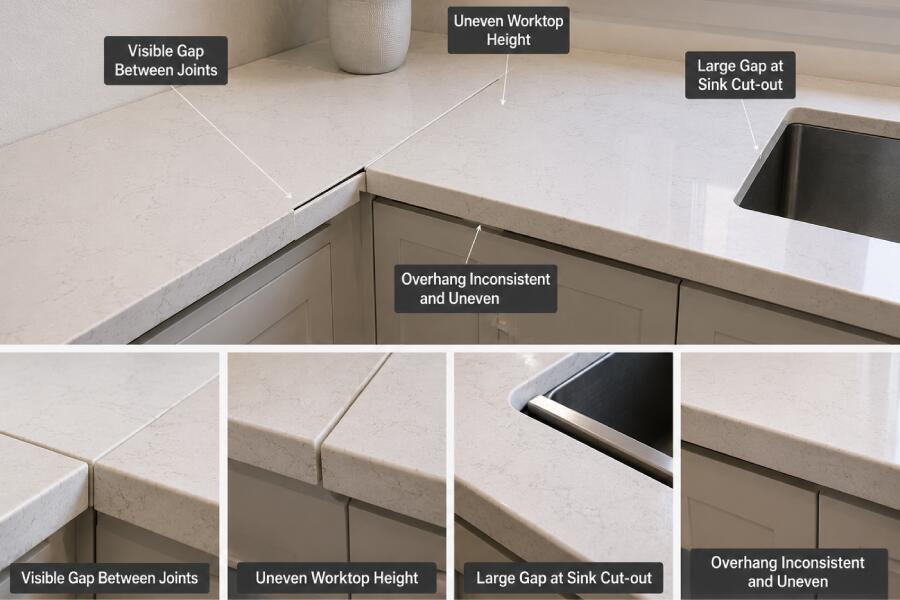
Incorrect Installation Can Cause Quartz to Crack
This is one of the biggest risks.
Quartz is extremely durable, but it still needs proper support underneath the slab.
If cabinets are uneven or unsupported, pressure builds across weak points over time.
Eventually, this stress may lead to:
- Hairline cracks
- Corner fractures
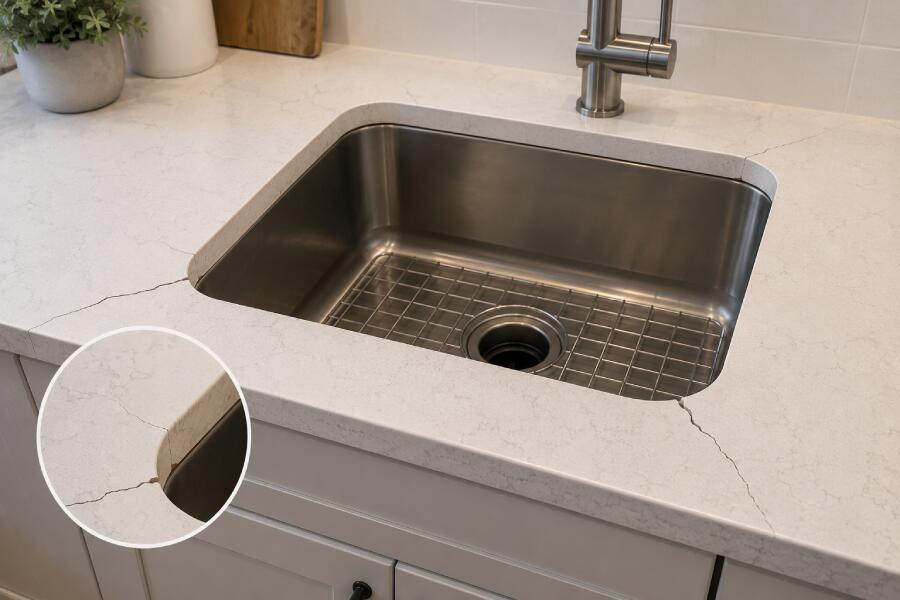
- Sink-area damage
- Hob cut-out cracks
- Weak overhangs
This is especially common around unsupported sink sections and breakfast bar overhangs.
That is why many homeowners researching durability also read Can Quartz Worktops Crack? What Actually Causes Damage? before choosing installation teams.
Uneven Joints Make Quartz Look Cheap
Bad joints instantly reduce the premium appearance of a kitchen.
Even expensive quartz can look disappointing if the seams are:
- Too thick
- Misaligned
- Uneven
- Poorly colour-matched
- Visibly raised
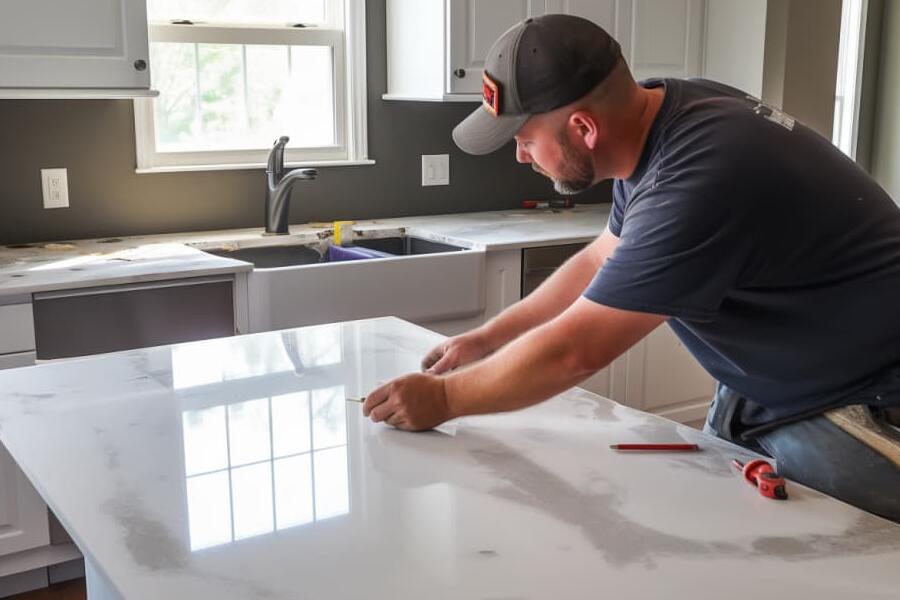
Good installers carefully minimise joins so the surface feels smooth and consistent.
Poor workmanship, however, often creates obvious seam lines that attract attention immediately.
Poor Support Can Cause Long-Term Movement
Quartz slabs are extremely heavy.
If the kitchen units underneath are not properly levelled or reinforced, the worktop may slowly shift over time.
This movement can lead to:
- Stress cracks
- Weak joins
- Silicone separation
- Splashback gaps
- Unstable overhangs
Large kitchen islands especially require strong support structures underneath the quartz.
This becomes even more important in open-plan kitchens with large waterfall edges or floating breakfast bars.
Incorrect Sink Cut-Outs Create Weak Areas
Sink areas are naturally one of the weakest parts of any quartz installation.
Poor fabrication around sinks can leave thin, unsupported corners that become vulnerable later.
Problems often include:
- Cracks near undermount sinks
- Weak tap cut-outs
- Poor edge polishing
- Uneven sink alignment
Experienced installers reinforce these sections carefully to prevent stress buildup.
A customer recently replaced a poorly fitted quartz worktop after small cracks appeared around the sink area, only eight months after installation. The quartz itself was still high quality. However, the original installers failed to properly support the cabinet frame underneath, causing constant pressure around the cut-out section.
Incorrect Installation Can Make Quartz More Vulnerable to Heat
Badly fitted quartz sometimes develops hidden stress points underneath the slab.
This means normal kitchen heat may affect weaker areas more easily over time.
For example:
- Unsupported seams near hobs
- Weak overhangs
- Tight expansion gaps
- Poor silicone spacing
can all increase thermal stress.
This is why heat protection still matters even with premium quartz surfaces.
Cheap Installation Usually Becomes Expensive Later
This is one of the biggest mistakes homeowners regret.
Trying to save money on fitting often leads to expensive repairs later.
Poor installation may eventually require:
- Joint repairs
- Full slab replacement
- Re-polishing
- Cabinet adjustments
- Sink refitting
This is one reason homeowners increasingly compare overall value instead of only choosing the cheapest
Articles like How Much Should Quartz Worktops Cost? help explain what actually affects pricing and why installation quality matters so much.
Quartz Itself Is Usually Not the Problem
A lot of people assume the slab failed.
But in reality, the installation process often determines how long quartz lasts.
Even affordable quartz can perform beautifully when fitted correctly.
Meanwhile, expensive quartz may still fail due to poor workmanship.
That is why choosing experienced fabricators matters just as much as choosing the quartz colour itself.
Homeowners comparing materials often research:
because installation expectations differ slightly between materials.
How to Tell If Quartz Was Installed Badly
There are several warning signs homeowners should watch for.
These include:
- Uneven joins
- Wobbling overhangs
- Visible gaps
- Cracks near sinks
- Poor silicone work
- Raised edges
- Hollow sounds underneath
- Misaligned splashbacks
Small issues usually become worse over time if ignored.
Final Thoughts
Quartz worktops are incredibly durable when installed correctly.
However, poor fitting can cause cracks, weak joins, movement, visual defects, and long-term structural problems even when the quartz itself is high quality.
That is why installation quality matters just as much as colour, thickness, or brand.
The best kitchens usually combine strong fabrication, careful fitting, proper support, and clean finishing details throughout the entire project.
And if you are still comparing surfaces, fitting options, or kitchen layouts, the team at get a quote can help you choose quartz installation solutions designed to last properly long term.
Frequently Asked Questions
- Can quartz crack because of bad installation?
Yes. Uneven support and poor fitting are some of the biggest causes of quartz cracking.
- Should quartz worktops flex or move?
No. Properly installed quartz should feel completely solid and stable.
- Why are my quartz joints uneven?
Uneven seams usually come from poor fabrication or rushed installation.
- Can bad installation make quartz look cheap?
Absolutely. Visible joins, poor alignment, and uneven edges can reduce the premium appearance of quartz.
- Is quartz harder to install than granite?
Quartz installation requires precision because the slabs are heavy and engineered differently from natural stone.